

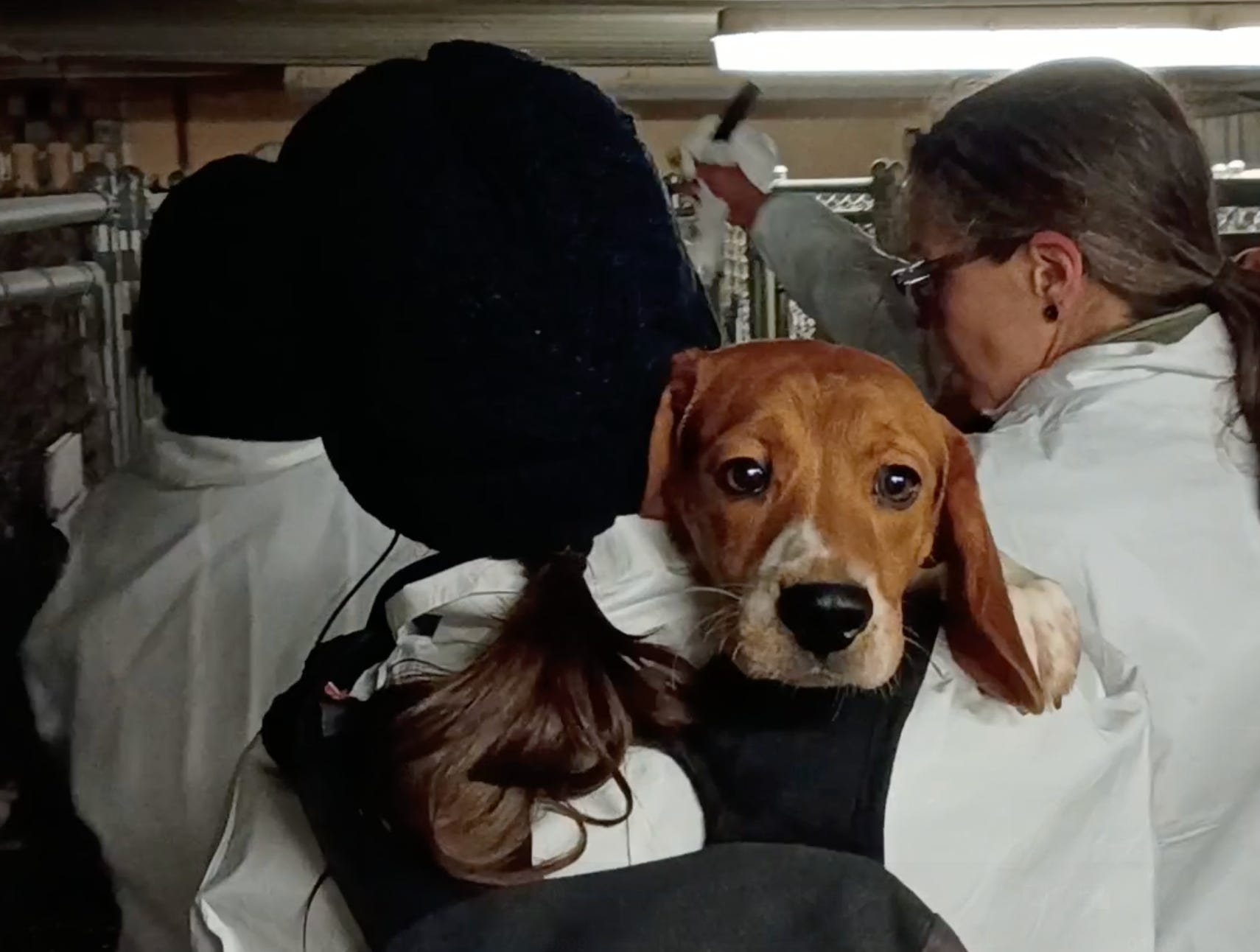
They said it was impossible to save him.
For nearly half a century, thousands of beagles just like him had been poisoned, mutilated, or simply killed and burned in huge pyres at places like Ridglan Farms. Yet public outcry over the abuses seemed incapable of creating change. The enormity of the industry’s abuses was matched by the enormity of its power. It had not just billions of dollars in revenue but the backing of the US government, which launched us into the nuclear age partly by performing fatal radiation experiments on dogs.
In the months before March 15, many experienced activists told me that our planned rescue at Ridglan was hopeless.
“You’re not going to get any out,” one said.
“It’s an impossible rescue,” another offered.
They were wrong.
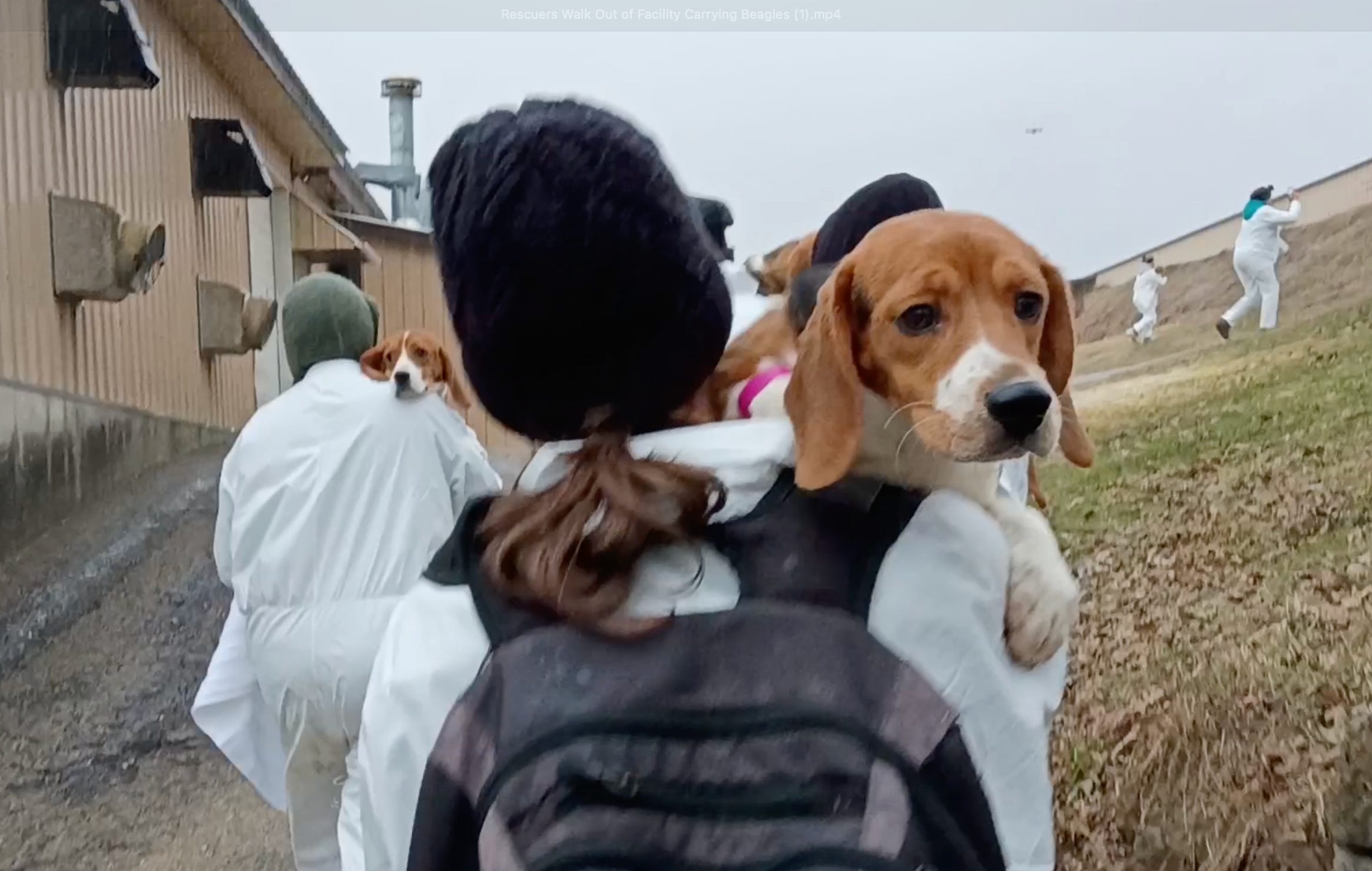
On March 15, we executed one of the largest open rescues in animal rights history, with around 150 people walking peacefully to rescue 30 dogs from cages at Ridglan Farms. Millions of people supported our efforts—including celebrities, journalists, and now the district’s Congressperson Mark Pocan. Most importantly, 22 beautiful little beagles—including the little boy above—got out of a Ridglan cage and felt freedom and love for the first time.
And now we are mobilizing 10 times as many people to go back and save all the dogs on April 19.
How did we do it? Here are the most important lessons.
We maintained a big tent—even when it was uncomfortable. Movements are powerful when they harness the power of numbers. Yet internal disputes over other issues—Israel/Gaza, MeToo, and Black Lives Matter—have torn the animal rights movement apart.
It almost happened to us. In the weeks leading up to the March 15 rescue, we heard many people were upset that we had invited renowned activist Gary Yourofsky, who is the author of the most-watched speech in animal rights history. His 2013 comments about the Israeli-Palestine conflict resurfaced; he somehow managed to piss people off on all sides of the issue.
But we resisted efforts to cancel him. No one on the action’s organizing committee agreed with Gary’s views. But we wanted to create a culture where people would find ways to unify despite our differences. And we knew that if we started imposing litmus tests on all the political issues out there, everyone would get kicked out. (No one can pass every litmus test!) We wanted to create a culture, instead, where people came together despite those differences.
Canceling Gary would undermine that culture. So we stood by him. And it worked. The March 15 action was one of the most ideologically diverse in animal rights history, with vegans and meat eaters joining socialists and Republicans in a unified rescue effort.
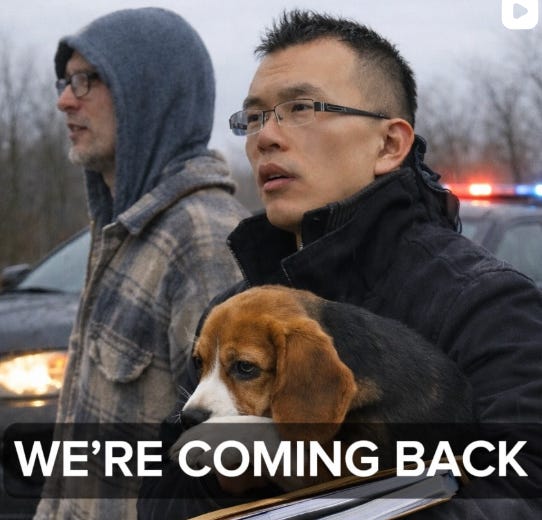
We were decentralized—but not afraid of leadership. Decentralized organizing allows movements to tap into the creativity of the masses. But when that creativity pulls a movement into too many different directions, it undermines focus and creates conflict. We succeeded on March 15 because we empowered the grassroots while also placing trust in leaders who could ensure focus and coordination.
This was most obvious in the action itself. Early efforts by “leaders” to access the facility failed, as our crowbars weren’t getting the doors open. Only some quick thinking by a new activist, a software engineer who had never been part of an open rescue, allowed us to find the window that ultimately made the rescue possible.
But when that access was finally achieved, we still needed leadership to get people focused and coordinated. And we had it. We had divided the 150 activists into small groups, each with a team lead.
“Entry Entry Entry,” I shouted into the radio.
And the team leads responded, directing all of our activists to the entry point. Within minutes, dozens of activists were streaming into the building and taking dogs out.
Bravery, not safety. Over the last two decades, activist movements have strongly elevated the concept of “safer spaces.” The belief, among many, was that we needed to make everyone feel safe before they’d be willing to take action. But effective movements make people feel brave, not safe. There are real risks to activism. Inspiring courage, rather than seeking safety, is key to creating change.
I failed at that about a year before the Ridglan action. A planned mass open rescue at a controversial slaughterhouse fell apart in part because concerns about safety—over legal repression or even violence— were not overcome. In the Ridglan rescue, in contrast, we made clear to people from the start that we were focused on the dogs’ safety, not our own. That did not mean we were going to take stupid risks. But it did mean that, when concerns over safety arose—for example, there was a rumor that Ridglan was planning to use deadly force against us—we were able to overcome them by referring back to our values. (“That’s not allowed under Wisconsin law,” I explained. “But if confronting violence is the only way to save the dogs, I’ll take the risk!”)
Nonviolence. One of the lessons of the last 200 years of social change is that nonviolence— a commitment to compassion even for one’s adversaries—beats violence. The reason is that nonviolent movements harness narrative power. With inspiring stories of peaceful activists confronting violent oppressors, nonviolent movements garner public support and undermine the system’s attempts to crack down on the resistance. After all, who wants to go up against grandmas holding flowers?
From Day 1 of our organizing for the first Ridglan rescue, we made nonviolence core to who we are. We shared stories of peaceful resistance from movements over the past 200 years, such as Dr. King and Gandhi. We practiced getting hassled by security and threatened by police, and responding with peaceful composure. We engaged in exercises that challenged us to empathize with our adversaries. And, when the moment of truth came, this preparation paid off. Dozens of flower-wielding activists bravely shielded dogs from violent employees, as others rushed them to safety. A lawyer friend who has handled dozens of activist cases told me afterwards that the story of the action was “perfect.”
That is nonviolence’s narrative power.
—
Now we need to apply these lessons again. On April 19, we face an even greater challenge. Ridglan has threatened violence against peaceful protesters—going so far as brandishing a gun at a former Ms. Teen Wisconsin who stopped outside the facility to pray for the dogs. It has also built up its facility like a fortress. Many people in this movement will face doubt or fear.
But with the lessons from March 15—and 200 years of history—we will overcome these challenges. Success is never 100% guaranteed. But when 1000+ people deploy the lessons from the last rescue—inclusivity, decentralized leadership, courage, and nonviolence— we will prevail.
And, not just one little boy, but thousands, will see sunlight for the first time.
Other updates
The deadline to sign up for the rescue at Ridglan Farms is this Sunday. We need time to prepare and train people, especially for rescue roles, so sign up as soon as you can! And ask your friends to do the same. There may be some limited roles for people who sign up after Sunday. But it’s unlikely they’ll be able to take part directly in the rescue. Again, feel free to use any content from my Substack or social media on your own pages to help promote the rescue. (There’s no need to ask for permission.) And send everyone to savethedogs.io!
To support you on that, we have an amazing Zoom event on Sunday at 1 pm ET—a conversation with renowned activist lawyer Steven Donziger, followed by an Ask Me Anything with the action organizers. Steve knows better than anyone the challenges of taking on power. He was jailed for his efforts to challenge Big Oil—but became a legend in the process. Right after the conversation with Steve, we’ll break out into small groups to discuss the action and brainstorm any questions you have for the organizers. Then we’ll come back as a big group and give you a chance to ask me and other organizers anything. Don’t miss this, as this will likely be our last briefing before the April 19 rescue. We’ll send you the Zoom if you join the WhatsApp community.
Two leaders from the last rescue have written breathtaking accounts of their experience. Aditya Aswani writes about leaping through a window in a last-ditch to effort to save a dog—only to have the pup torn from his arms. And attorney Abie Brauner gives you a vivid sense of what it’s like to be part of an open rescue mission—from training to carrying dogs—this is a must-read if you’re new to rescue.
Until next time!
Everyone going back is my hero. I’m
Also, nervous for your safety and the beagles.
Every day I’m out walking my dog, thinking of these beagles and others stuck in this situation. I hope all beagle testing will end or all animal testing.
Shut these damn places down that experiment on dogs and other animals!