

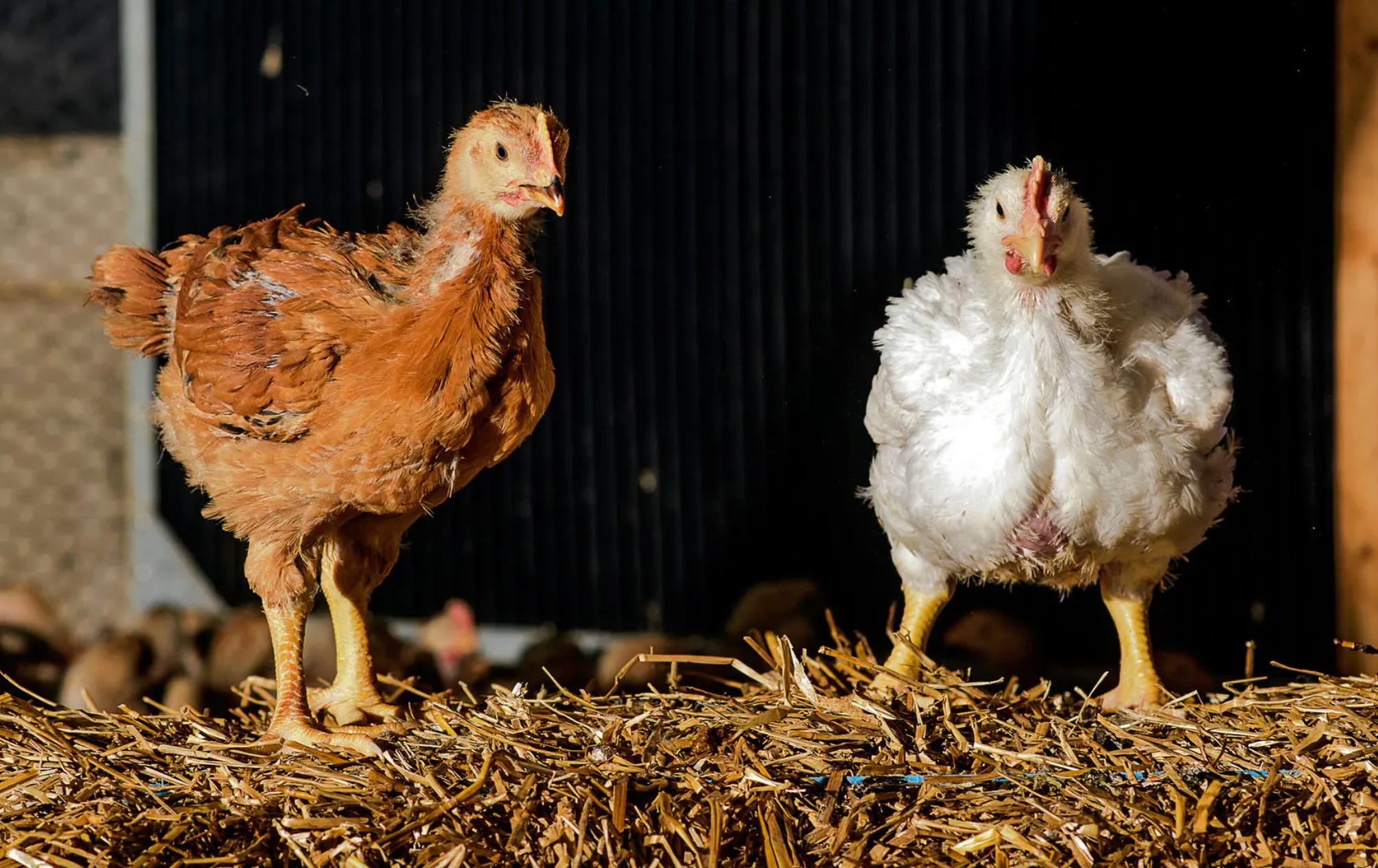
Lewis Bollard at Coefficient Giving (formerly Open Philanthropy) announced today that Norway has agreed to phase out “fast-growing” breeds of chickens. This is an important sign of progress. The broiler chicken industry has been resistant to change, and the fact that an entire nation is transforming its practices is a demonstration of increasing concern for animal welfare. This is a historic win, plain and simple, and animal advocates should celebrate.
Having said that, I worry, as I did with cage-free eggs a decade ago, that some of the benefits are being (unintentionally) oversold. This can generate two problems. The first is that the movement and public come to believe that progress is larger than it actually is. This so-called “halo effect”—where exaggerated claims of moral progress cause people to continue engaging in bad behavior—is now well demonstrated in the social scientific literature. (Economist John List, who is on the short list for a Nobel Prize, created an experimental company to disprove the phenomenon. Instead, he confirmed it.)
The second problem is credibility. We live in an era of radical transparency. Every weakness in an argument or campaign will inevitably be exposed. It is thus vital that we bathe every key assumption in the fire of empirical dissent. Otherwise, it becomes trivially easy for critics to point out our failings—and undermine our efforts in the future. Why would any legislature, company, or even consumer believe us when we ask them to change, if it turns out our requested change is just fluff?
But I’ve skipped ahead a bit from the core question: are slow-growing broilers actually better for the birds? There are purely statistical reasons to be concerned. If each chicken is producing less flesh, in a smaller amount of time, does that mean the shift to slow-growing breeds will just condemn more chickens to torture and death?
Moreover, if the lives of chickens are miserable, do we really want them to live longer? Is 10 weeks of torture truly better than 6 weeks of torture, even if those 10 weeks come with the ability to walk?
Finally, and perhaps most importantly, where do we go from here? Every effective campaign must solve the Day 2 Problem—how does the momentum from this win feed into more power to achieve the next? Is there a way we can go from winning on slow-growing broilers to winning the campaign that comes up next?
All of these questions are ultimately empirical. We should look to evidence for answers. It is possible the answers are already out there. I must confess I have not looked closely yet. But even as we celebrate this win, let’s not forget to answer them. Just as every defeat can turn into unexpected victory, every victory can turn into unexpected defeat. The difference lies, in no small part, from what we learn from the fight.