

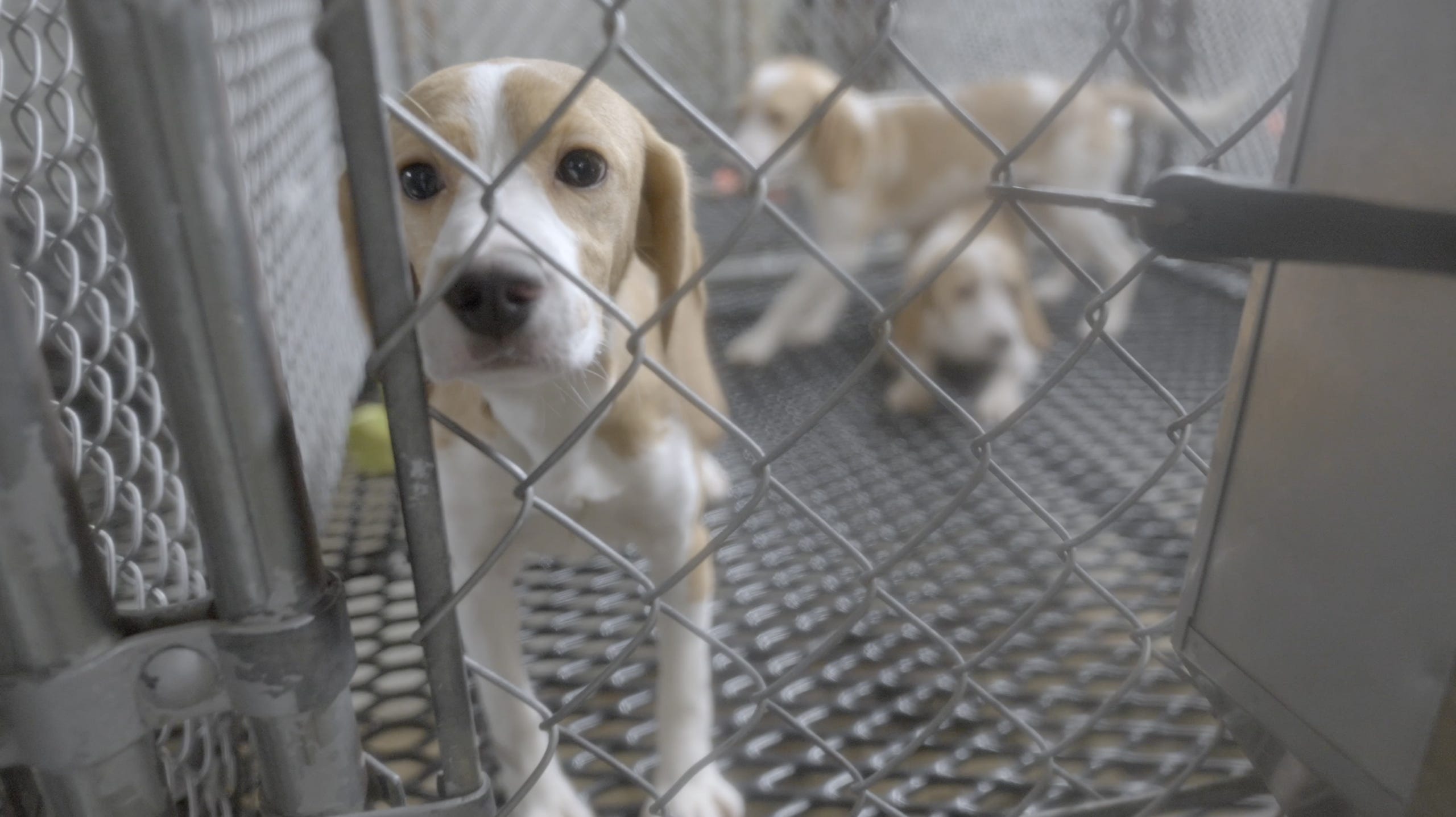
The last 150 beagles from Ridglan were released on Wednesday; every last dog is now free.
We’ve established a solid strategy for defending the 47 new defendants who face charges for the rescue, including the Save the Dogs Summit, where we’ll gather to support them in Wisconsin from Sept 4-6. (Heads up: early bird pricing ends tomorrow!)
And we just received fascinating new documents about the police response on April 18 that will help us with the next rescue effort. (More on that in a bit.)
It’s been a week of great news. So you might be surprised to hear that I’ve been feeling despair. While the dogs are free, it should not have been this hard to get the government to enforce the law. The evidence against Ridglan was overwhelming. And yet the government has doubled down on cruelty by pursuing the largest prosecution of animal rescuers in history while doing nothing to hold animal abusers to account.
Some days I look at all of it and think: what is the point? The system is fucked.
But when I start feeling this way, I remind myself of the story of Martin Seligman. Seligman is a professor at the University of Pennsylvania, where he made one of the most famous discoveries in the history of psychology. And he did it by electrocuting a dog.
In the experiment, Seligman placed a dog in a “shuttle box” with two compartments and metal flooring from which he could deliver painful shocks. One side was electrified; the other, a short barrier away, was not. And when a shock was delivered, Seligman noted that the dog “runs frantically about, defecating, urinating, and howling, until it accidentally scrambles over the barrier and so escapes the shock.” All the dogs eventually learned to jump to the safe side of the box to avoid the shock.
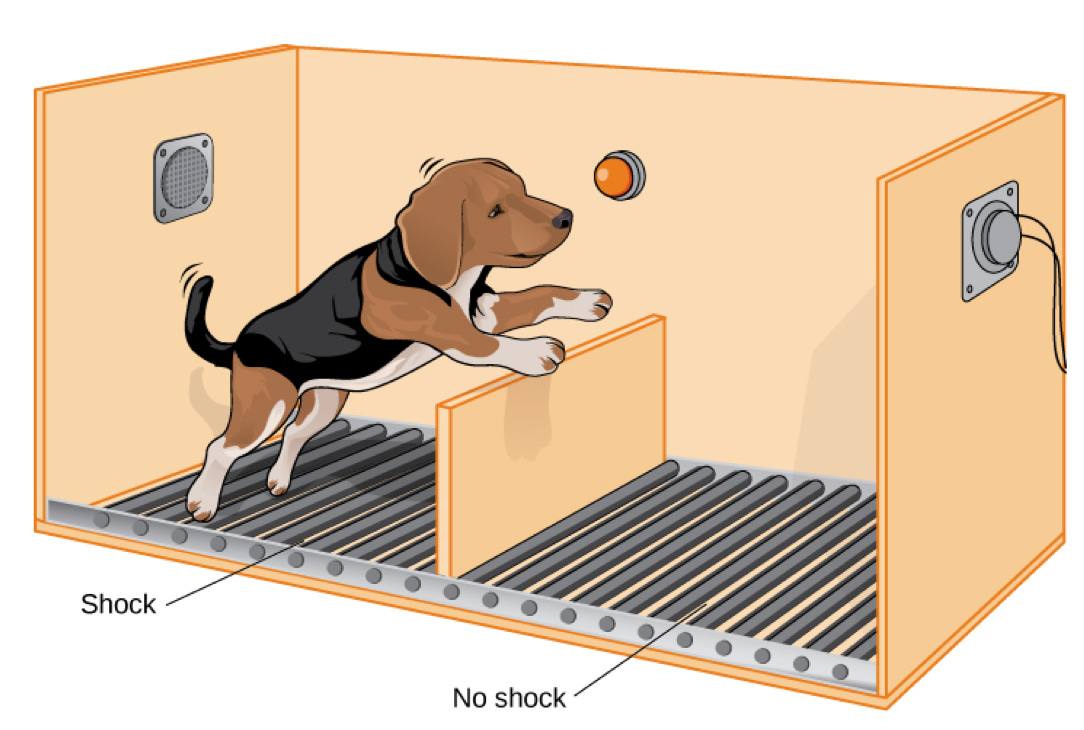
But there was an exception. When dogs were placed in a shuttle box where electric shocks were initially delivered to both sides of the box, they would run just as frantically but find no safety. Soon, they would simply lie down on the floor, whining helplessly, as they were repeatedly shocked. Remarkably, this would continue even when the electricity on one side of the box was turned off. There was an easy way to escape the shocks—just jump to the other side of the box—but the dogs had given up. Seligman called it “learned helplessness.” Teach an animal that her efforts are futile, and she loses the ability to see the way out even when it’s just inches away.
Seligman’s goal in the experiment was to understand human despair. He succeeded at that—his work is celebrated across the field of psychology—but he failed to grasp the moral stain in his work: He had reached a breakthrough in understanding human despair by causing despair in dogs. There is nothing to celebrate in that.
But I’m not sharing this story to tarnish an old professor’s reputation. I share it because the pathology Seligman saw in dogs—learned helplessness—extends to the humans who love dogs as well. We have been taught to be helpless in the face of cruel shocks.
This is true of me. I remember when I first learned that dogs from Ridglan had been force-fed industrial laundry detergent. I was shocked. I had to save these dogs.
But for 10 years, the system tried to teach me that it was hopeless to try. I filed a criminal complaint. No one responded. I worked with a journalist to expose the conditions. It was ignored. And when I finally walked right into Ridglan in April 2017, and came out with a blind, frightened puppy—little Julie—the government charged me with crimes.
As the case proceeded, many told me to give up.
“Take a plea,” one experienced leader in the movement told me. “Live to fight another day.”
And there were days when that was tempting. But I refused to accept that we were helpless. Maybe we couldn’t rescue all the dogs ourselves. But I thought we could win people over to this cause.
So we fought. We did small things. A press release. A ten-person protest. Another letter to a politician. Each was insignificant on its own. Each was still a win. And something amazing happened. The momentum started to build, with sympathetic portrayals in the media. Social media videos started going viral. Then, on the first morning of trial, the government dropped every charge against me and my co-defendants. That win taught thousands of people that we can beat the industry. We can rescue the dogs and win in court.
And on April 18, 1000+ people marched right up to Ridglan to bring that lesson to life. Now Ridglan is finished. Its victims will no longer face torture in a vivisector’s cage. They’ll grow old with their families. And it happened because we fought back against learned helplessness.
There is a lesson here, one that Seligman himself later discovered. If you feel helpless, find small ways to make progress—then do these small things over and over until you have taught yourself that you can make a difference. Seligman calls it “the expectation of control,” but I think there’s a better term: learned strength. We have to teach ourselves—and one another—that we have the strength to help.
And now we have to learn that lesson again. There are big obstacles ahead. Our friends face serious criminal charges, including up to 15 years in prison. RFK Jr. and Brooke Rollins made big commitments—to phase out animal experiments—but have yet to deliver on their promises. Most importantly, tens of thousands of dogs remain trapped in laboratory cages, victims of criminal abuse like the phosgene gas experiments inflicted on beagles from Marshall BioResources. In the face of so much cruelty and corruption, it would be easy to learn to be helpless.
But we can’t let that happen. We have to learn to find strength, even in seemingly small actions. The phone call to a legislator. The dinner with a friend who tears up about the dogs. The video of the Ridglan pups that goes on social media. Every step is building our capacity. It’s teaching us to be strong.
That, more than anything, is what we will do at the Save the Dogs Summit: learn strength. The road ahead is a hard one. It would be easy to give up. But we have to see the opportunities, even in adversity. We’ll do that in Madison from Sept 4-6—and create a movement stronger than it’s ever been.
Then, we’ll save all the dogs.
Other stuff
The Save the Dogs Summit is happening on Sept 4-6 in Madison, WI, and early bird registration ends tomorrow. We’ll be sharing new disturbing evidence of criminal abuse at some of the largest vivisection facilities in the nation—and giving you the practical skills to make “small wins” for the dogs. Just as important, we’ll be holding a rally in defense of the Ridglan rescue on the first day of the summit. Sign up here!
If you can come early to the summit, attend the preliminary hearing on Sept 2. Forty-seven new defendants face charges, and the evidence will be presented against them for the first time in court. When the courtroom is packed for the rescuers, it changes the entire tone of the proceeding—and helps us gain favorable media. I’ll be there in court. I hope you will, too.
We are holding our usual weekly call for the Save the Dogs Network on Saturday at 1 pm ET / 10 am PT, and I’ll be sharing some important new evidence we’ve obtained about the police actions on April 18. If you recall, the police used military-style force against peaceful rescuers on that day. And we’ve just obtained internal policy memos on the nature of that police response, which I’ll break down with you tomorrow. Jen will also be sharing some new opportunities to reach legislators, and Ella will talk about updates on the March to Abolish Animal Testing. Here’s the link.
It takes a fierce commitment to the cause and having the tenacity, gumption and willingness to spend time and money to persevere when big wins are rare and far between. There may be some Ridglan post-win slump going on. But now is the time to seize the moment while we have the favorable attention of the media and the general public on the miserable plight of dogs in vivisection facilities.
I'm in Australia and am following your campaign. Fantastic work. It's baffling anyone would want to be involved in such a cruel industry. You're on the right side of history Wayne. Thank you for your good works.