

Yesterday, President Donald Trump announced that the United States has bombed three nuclear sites in Iran, including the heavily-fortified uranium enrichment plant at Fordo. Many commentators, including Trump’s own former Defense Secretary James “Mad Dog” Mattis, have warned that conflict with Iran could be disastrous — at least as bad as the wars against Iraq and Afghanistan (which were smaller and less powerful adversaries).
But Trump’s actions are far more dangerous than even the critical political commentary might suggest. The US public is historically divided on military action, which makes moving forward with risky action a recipe for catastrophe. This is particularly true when Trump’s actions are likely to provoke a global backlash; support for Iran is already growing in unexpected places due to this backlash. Perhaps most importantly, the attack is unfolding in a world with increasing political volatility driven in part by social movements. Another war, even a “small” one, could light a match on an anti-America grassroots movement that could literally destroy the world.
But here is my most important point: Trump’s actions, foolhardy though they are, also present opportunities for those who seek to make a more peaceful world, including for animals. But only if grassroots movements maintain nonviolence.
Let’s jump into this.
A Divided Nation
One of the most important insights of social science over the last two decades is that it is hard to take on risky action without trust and cooperation. Uncertainty and danger place pressure on social bonds. And the complexity of high-risk action requires coordination between large numbers of people. I know this from experience. When we walked with 500 people into a factory farm in Sonoma County, it was important that, when one path was blocked, team members could work together and swiftly move to find another. Solidarity among activists was a big part of the reason we were able to rescue 37 animals—and garner national media attention in the process.
And yet one of the most remarkable things about Trump’s actions yesterday is that they are being taken with unprecedented levels of division. It is hard enough to achieve success with risky action when the nation is unified, as it was at the start of US wars in Vietnam, Afghanistan, and Iraq (all of which ended in failure). The Iran attack might be the most unpopular military action in American history. One poll showed Americans disapproving of an Iran strike by a 5:1 ratio. Democratic lawmakers have called on Trump to be impeached for exceeding his powers under the Constitution. Even Trump’s own team is in conflict, with key supporters like right-wing influencer Tucker Carlson attacking him publicly for bringing America into another unnecessary war.
Look at how uncertain and confused Trump’s own Cabinet appeared at his speech announcing the Iran strikes yesterday. Secretary of Defense Pete Hegseth, on the far right, has the fast-blinking eyes and tense posture of a teenager who’s about to get punished. This is a recipe for catastrophe.
The Backlash Effect
You can’t blame the Cabinet for looking scared because they are operating in a world where powerful parties are often undermined by the Backlash Effect. This concept, first outlined by Harvard’s Michael Klarman in the context of the Civil Rights Movement, explains how the use of power is often undermined by the backlash against it. In the Civil Rights Movement, white nationalists and politicians thought they had the power to crush the resistance, but their attempts to crush the movement just made it more powerful. I have used this Backlash Effect to positive effect in the open rescue trials; when powerful industries tried to crush us, it instead earned us unprecedented attention and support.
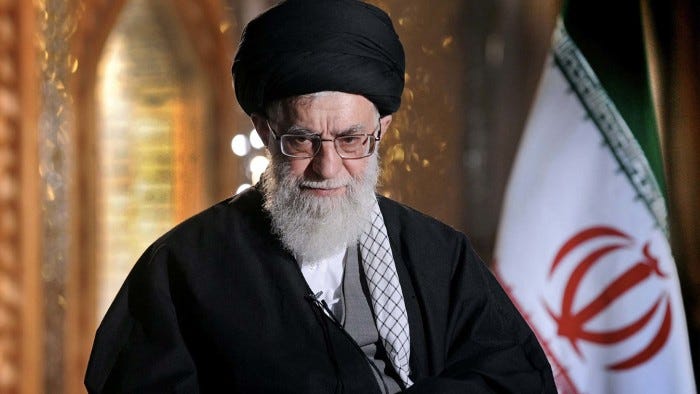
Trump and his allies seem stuck in a 19th-century conception of power that ignores the Backlash Effect. For example, Iran’s Supreme Leader Sayyid Ali Khamenei was a marginal and isolated figure before the attacks, often getting a few hundred likes per tweet, akin to a mid-tier influencer. But since Israel and America started their bombing campaigns, Khamenei has become 100 times as influential. Even his weird religious posts are getting 100,000+ likes. This includes support from unexpected places, such as Iranian dissident and Nobel Peace Prize winner Narges Mohammadi. Mohammadi, who has been repeatedly imprisoned by the Iranian government, recently spoke to CNN to defend the regime and decry the bombings.
The upshot is that the attention and sympathy triggered by the Backlash Effect will likely end up being much more powerful than Trump’s bombs. An entire generation of not just Iranians, but people across the world, will be mobilized against America.
On Social Entropy
This anti-American mobilization is particularly dangerous given the volatility we are seeing in global politics. I’ve written in the past about the concept of social entropy: the irresistible force, akin to the Second Law of Thermodynamics, that pulls human civilization toward disorder. Social movements play an important role in this process. If there’s something unfair or unstable in the system, social movements pick at this vulnerability, akin to pulling at loose threads on a shirt. The problem with this process, however, is that social movements often pick at the wrong thread. They choose scapegoating supposed enemies over true system reform.
Trump is an example of this himself. Traditions that have defined the Republican Party and American democracy for decades, such as our commitment to free trade, have been pulled apart by the MAGA movement. Americans rightly began to see our system as one that was devastating to the working class; millions of Americans lost their jobs due to free trade. But instead of accurately diagnosing the problem — the inequality built into the American system — MAGA scapegoated outsiders and immigrants instead, and now threatens the very viability of our democracy. This is social entropy work.
And social entropy is replicating in nations across the world. It’s the reason the vast majority of Russians support Putin’s invasion of Ukraine. And the reason most Chinese support an invasion of Taiwan. The government needs to defend itself from vulnerability and finds someone to blame for its problems.
And America’s actions yesterday feed into this process. The governments of Iran, China, and Russia are all extremely vulnerable; they haven’t delivered on promises to their own people. A militaristic America is an easy scapegoat for these problems. But the threat here is not just unrest or instability but the future of humanity on this planet.
Lest you think I am exaggerating, consider this. Iran is embedded in a web of alliances with nations including Russia and China (the latter of which buys 90% of Iran’s oil exports). Escalating conflict between great power alliances was part of what caused World War I and World War II. Small miscalculations — such as Austria-Hungary’s incorrect belief that it could attack a tiny nation (Serbia) with no other consequences — led to the most deadly catastrophes in human history. It’s not implausible that a similar escalation could provoke another world war, but this time with nuclear weapons. If we don’t stop social entropy, it could destroy us all.
There’s a Silver Lining
But social entropy has another possible effect. It can bring systems to a more stable, long-term equilibrium. Only a just and stable society can resist the power of entropy over the long term. Many of the sources of division and hate, both domestically and abroad, relate to deeper problems with the global political order. There is popular backlash against American power, for example, because American power has often been abused. Instead of leading to global crisis, however, it’s possible to harness this backlash to make America — and the world — a better and more stable place.
Indeed, this is precisely what happened with the Civil Rights and anti-war movements in the 1960s. Activists concerned with the abuse of American power, both at home and abroad, triggered a transformation in global politics. The result was the end of racial segregation at home, and an unprecedented era of peace abroad. How can we achieve the same transformation today?
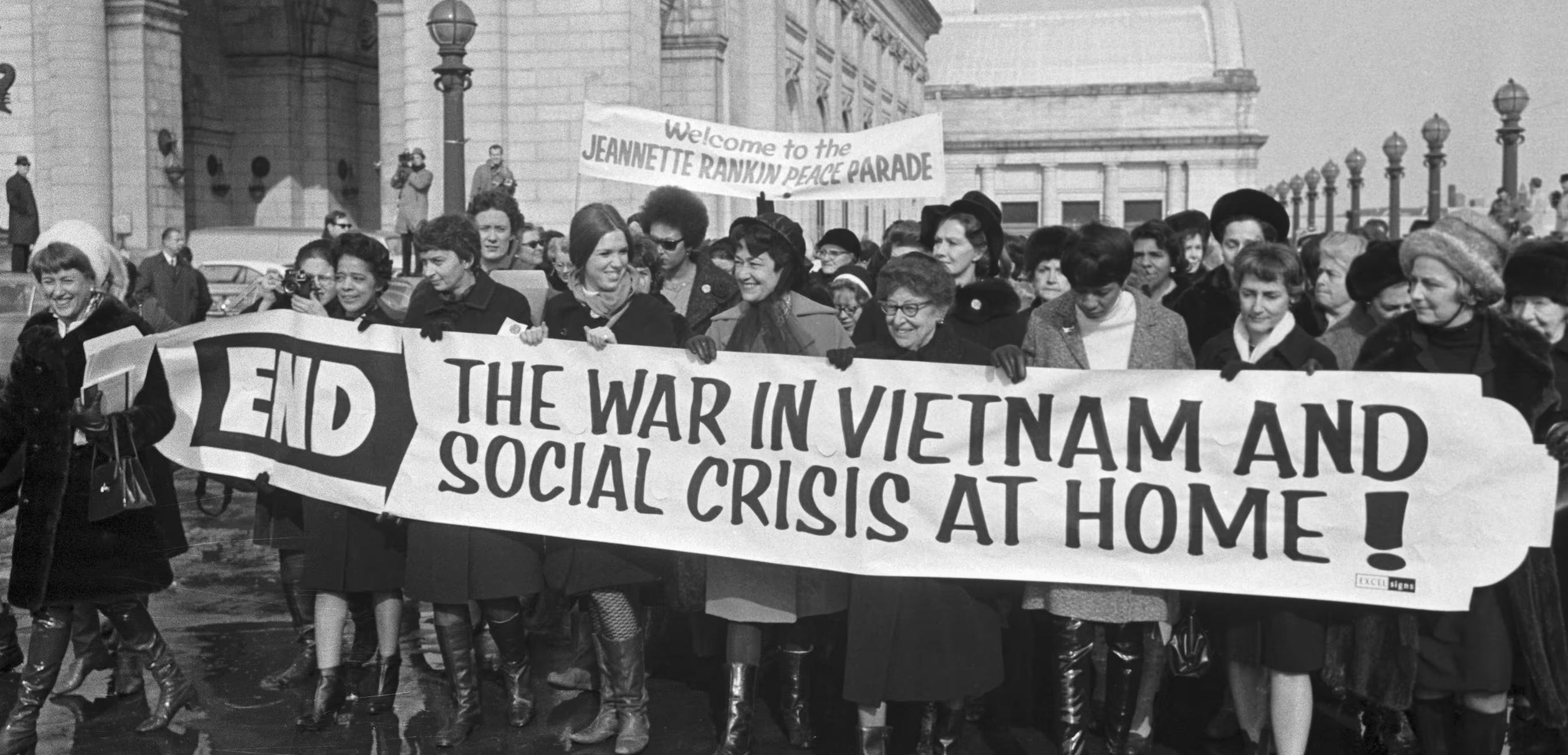
In a word: nonviolence. I’ve written recently about how protest movements have failed because of their inability to maintain nonviolent discipline. Even people who agree that something terrible is happening in Gaza, for example, will not support a movement threatening to kill Zionists. In contrast, when movements such as the Civil Rights Movement have confronted injustice with kindness, they have won sympathy from unexpected places. (Lyndon Johnson was a racist Southern politician who ultimately signed the Civil Rights Act.) Nonviolence of this sort, expressed not just in our actions but our hearts, harnesses the power of protest to build rather than destroy. To expand our moral boundaries rather than constrict them.
I believe the animal rights movement has a key role in building this culture of nonviolence. As entropy threatens trust and cooperation, only a movement radically grounded in kindness towards all beings can bring our species together. Solving the animal problem is the only way to tie up the loose ends that could pull our entire system apart.
In the meantime, the important lesson for all those who oppose Trump’s war is that we must not let our anger send us down the path to violence or hate. Trump’s greatest error is to look at the chaos of the world and search for enemies everywhere. This is profoundly misguided. In an era of chaos, it is even more important for us to search for friends.
Wayne, you are a brilliant thinker and writer. The animal rights movement intersects with most other movements, and you articulate it so well. It’s frustrating that too many people don’t see how important non-violence is or they just can’t control themselves. I read that John Lennon said “When it gets down to having to use violence, then you are playing the system’s game. The establishment will irritate you – pull your beard, flick your face – to make you fight. Because once they’ve got you violent, then they know how to handle you. The only thing they don’t know how to handle is non-violence and humor.” Thank you, Wayne, for your activism and leadership.
Thank you, Wayne, for this glimmer of hope, a"Silver Lining," even as you explain the Backlash Effect. Together, we must harness the power of protest to build, rather than destroy. I believe, as you do, in a movement grounded in kindness towards all beings, and pray that this will bring our species together. Thank you for being the light of kindness in a world of chaos. Your dedication to all animals is what helps to guide me.