

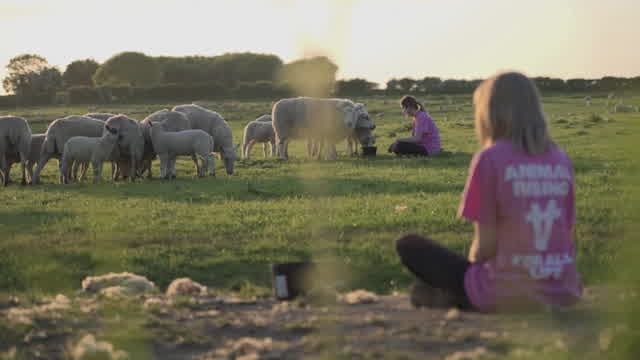
On Thursday, my wife Rose Patterson was convicted by a jury for rescuing three lambs from the King of England. When the verdict was spoken by the foreman of the jury—a stern-faced man who scowled through most of the trial—it hit me like a truck. We had been hopeful about the outcome of the trial, despite chaos in the court schedule (and thus our preparations). A juror in the front row, an older woman with short brown hair and glasses, had given what seemed like a wink to the defendants just a day before.
But it was not the sign I thought it was. That same woman, as she walked into the courtroom for the verdict, gave out a visible sigh, as if she had given up on the case. Moments later, we heard the cursed words.
“Guilty!” the foreman said, with acid in his voice. He repeated two more times for the other defendants.
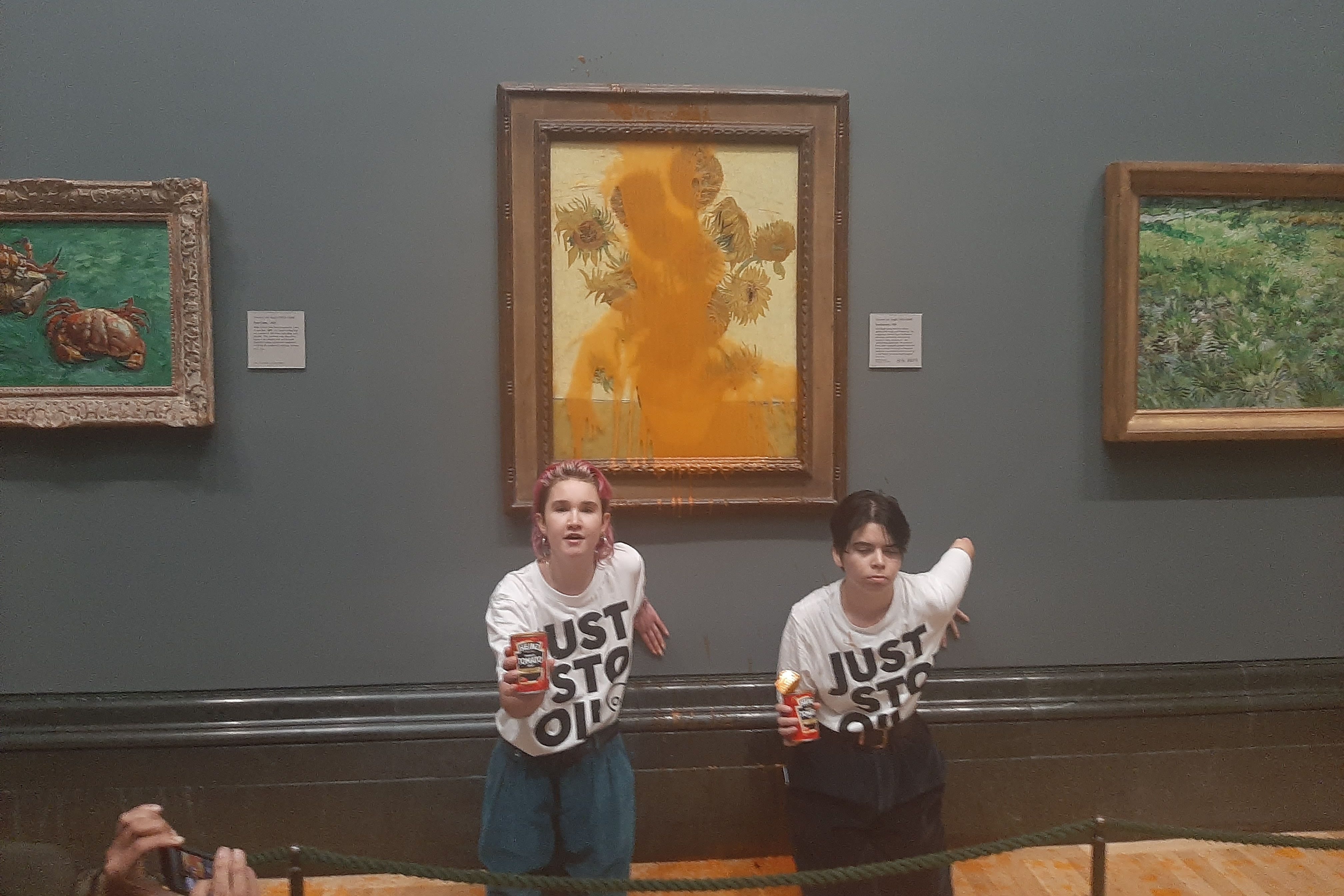
We did not know at the time what sentence would be imposed. And while the “theft” of a lamb—a nonviolent action done with good intentions—would not usually be hit with severe sentences, recent activist cases have led to shockingly harsh punishments in the UK. Two young women were sentenced to 20 and 24 months for splashing tomato soup on the glass case of a Van Gogh painting in the National Gallery. Palestine Action protesters were hit with sentences of 4-7 years for doing damage to an Israeli arms contractor based in the UK. Sentences against nonviolent protesters have become so severe in recent years that Human Rights Watch and a UN Special Rapporteur have condemned the UK’s crackdown on activists as a threat to democracy.
We didn’t know if Rose and her co-defendants Rosa Sharkey and Sarah Foy would become yet another case study in a human rights organization’s report on the rise of authoritarianism in Europe.
And yet I remain more optimistic than ever. This is partly because their case is bringing attention to the abuse of animals. Even conservative outlets, such as the Daily Mail, gave extensive coverage to the concerns raised by my wife about animals being improperly stunned on the slaughter line—leaving many to be effectively eviscerated alive.
But the primary reason I’m optimistic is that, no matter what happens in this one case, it does not change that “the writing is on the wall.” Those are the words of another man who attempted to put my wife in prison in a very similar case. Scott Marshall, the CEO and patriarch of Marshall BioResources, said those words in an article recently about the March to Abolish Animal Testing, which ended today at the front gates of the massive Marshall facility in North Rose, NY, where over 16,000 dogs are caged and prepared for experiments.
“For many years we never had protests at our sites,” Marshall said. “Now within last couple years due to our main competitors going out of business, we’re the last man standing and we’re a big target.”
“Nobody wants to see dogs used in research,” Marshall continued. “I know the writing is on the wall.”
And he is right—about all forms of animal abuse. Earlier this year, my wife Rose was acquitted in a case very similar to her lamb trial. Two other cases involving farm animals ended in historic acquittals in the United States. Those court cases, however, are just one part of a much larger change that is coming for companies like Marshall. In the last week, a former prosecutor we are working with, Bonnie Klapper, has had productive conversations with influential members of government regarding the criminal referral she submitted last month regarding mass killings at Marshall. A criminal case may actually be brought against Marshall—an unprecedented development against a large corporate abuser.
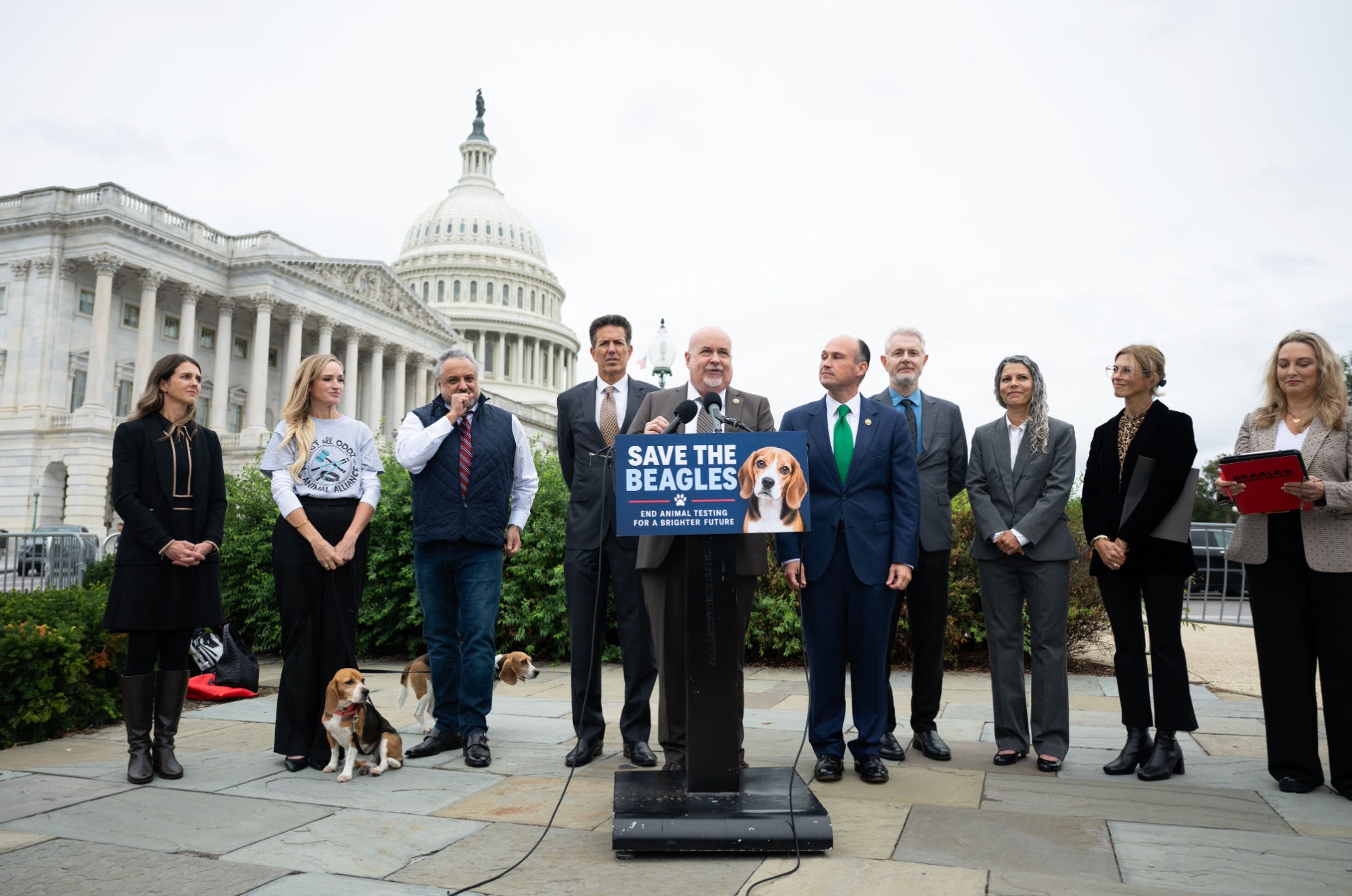
Perhaps even more important, funding for the entire industry may soon end. On Wednesday, September 23, House members Nick Langworthy (NY) and Mark Pocan (WI) introduced bipartisan legislation, the COMPACT Act, that would end all NIH funding of experiments on dogs and cats. It is a courageous, historic proposal—and one that will effectively defund the entire industry, which depends on NIH funding to prop up its criminal activities, including not just mass killings but devocalization surgeries, inhalation experiments, and worse.
The industry is fighting back so hard precisely because it is under duress. That is a reason for hope.
For this hope to be realized, though, we need a movement to rise up. One of the saddest things about my wife’s court case was that, while there was extensive media, the courtroom was mostly empty of supporters. On the first day of the trial, journalists outnumbered me (the sole supporter in the gallery). There was little pressure on the court or government to give my wife a fair shot. This short circuits the power of direct action, which creates change by mobilizing support for the cause through symbolism and sacrifice.
Things will be very different in the fight for the dogs. Already, Reps. Langworthy and Pocan have shown their support not just for their legislation—but for the rescue efforts by the movement. Langworthy was outside the gates of Marshall himself just a few months ago demanding freedom for the dogs. Pocan joined the Ridglan rescuers at a reunion for the Ridglan beagles, even as many faced criminal charges. (He took a photo with the defendants.) Support from Congress members such as Pocan and Langworthy will destabilize the industry’s efforts to tarnish us as radicals and criminals; we have the support of the very figures elected to represent the public will.
But to sustain that support—to sustain the rising movement— we need you to support them, the legislators and the dogs. On Sunday, Sept 27, Mark Pocan will be joining us to talk about the COMPACT Act—and what you can do to help pass it. It is a relationship that is crucial not just for saving the dogs and cats, but countless future animals, too. So I hope you will join us. Numbers really count.
You can RSVP here for the call, which will be 8 pm ET / 5 pm PT at savethedogs.io/zoom.
It is too late for my wife and her co-defendants. I am partly to blame for that, as I did precious little to assist her legal defense (or promote her story) in the weeks and months leading up to the trial. And yet, even in her case, the ending was not as harsh as we feared.
“I believe this case is suitable for a community order,” the Judge indicated at sentencing. He described the three defendants as “intelligent and capable women” who were raising “sensitive and important matters of public interest.” They will each do 150 hours of community service and pay a £250 fine but serve no jail time.
History will remember even this light punishment very differently. Today’s criminals are tomorrow’s freedom fighters. Three sheep, whose lives would have ended in terror in a slaughterhouse, remain alive because of my wife’s courage.
The same will soon be said about the dogs at Marshall BioResources. One person’s courage—to make a phone call to a key legislator in the House—may tip the scales towards freedom. You could be that person. There could be a dog trapped in a Marshall cage waiting for you to act.
You won’t have to do it alone. I hope you’ll join us tomorrow. Pocan and Langworthy’s legislation is crucial, but it is just the beginning. We save the Marshall dogs next, building on the momentum behind the COMPACT Act. But after the Marshall dogs, we move to our greater mission:
Save them all.
Love you Rose and Wayne for brining attention to the exploitation of animals and risking so much❤️❤️
My heart breaks for Rose and all the other activists who risk their freedom and lives. But Rose and her compatriots engaged in nonviolent actions. The Palestinian activists who attacked the factory almost killed a police officer who now has to live with a fractured spine. Animal rights activists are almost always peaceful and do not engage in violence. The pro Hamas activists not so much. Please dig deeper before you compare Rose’s courageous actions to the actions that almost killed a police officer.