

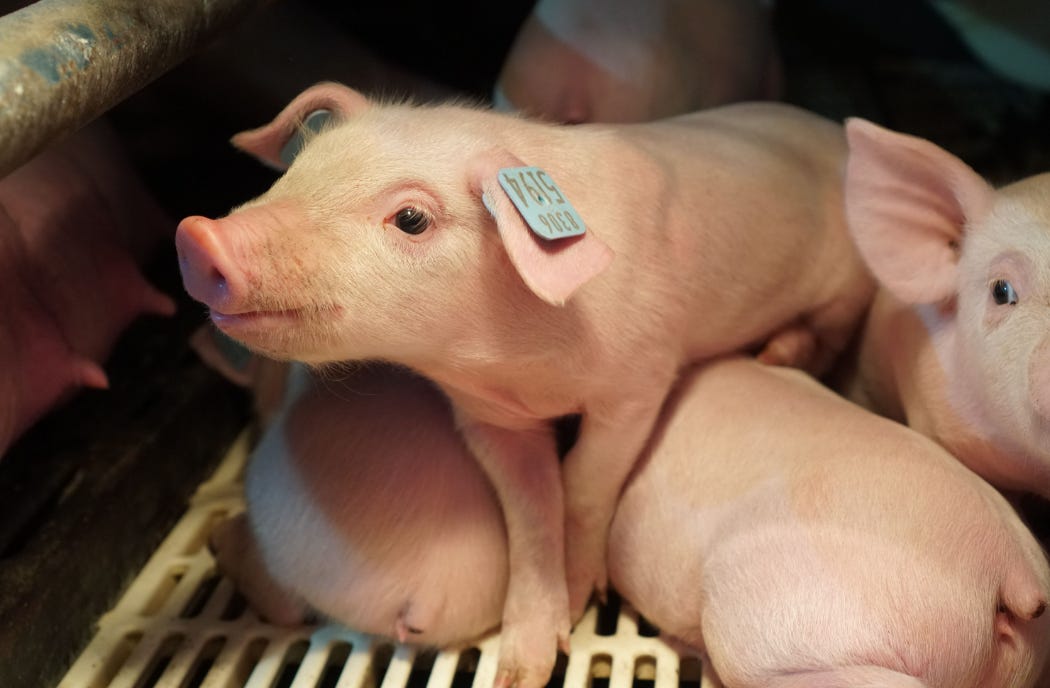
The day of our birth is a celebration of life. But for animals, the day of birth is the day they are marked for death.
Perhaps the most famous example of this in American culture is Wilbur from Charlotte’s Web. Like most pigs raised by human beings, Wilbur had a schedule set for his slaughter. On the day in question, the farmer (John Arable) would end him with a violent stroke of an axe. But then something unexpected happened; his daughter Fern intervened. From the book:
"Please don't kill it!" Fern sobbed. "It's unfair.”
"Fern," Mr. Arable said gently, "you will have to learn to control yourself."
"Control myself?" yelled Fern."This is a matter of life and death…”
Tears ran down her cheeks and she took hold of the ax and tried to pull it out of her father's hand.
"This is the most terrible case of injustice I ever heard of.”
A queer look came over John Arable’s face. He seemed almost ready to cry himself.
Those tears saved Wilbur’s life. And his remarkable story – of being saved by a little girl, then by a motherly spider and finally a grumpy rat – became among the best-selling children’s novels in history. “Human beings must always be on the watch for the coming of wonders,” the author EB White wrote. And there is nothing more wondrous than being saved from the mark of death.
Many see Wilbur’s story as charming but ultimately fictional. It is, after all, a children’s novel. But there are real-life stories like Wilbur’s unfolding across the nation. Take Petunia, a mini-pig rescued from an experimentation facility and brought to a sanctuary. On the day of her birth, Petunia had a schedule set for her death. Experiments were performed on her, leaving her skin covered with rashes and scars. And soon, a vivisector would come with a weapon – a gas chamber, or a needle – that would end her life.
But Petunia survived. We can’t say, exactly, how or why. But I imagine it went something like this. Someone looked into Petunia’s eyes and saw the spark of life.
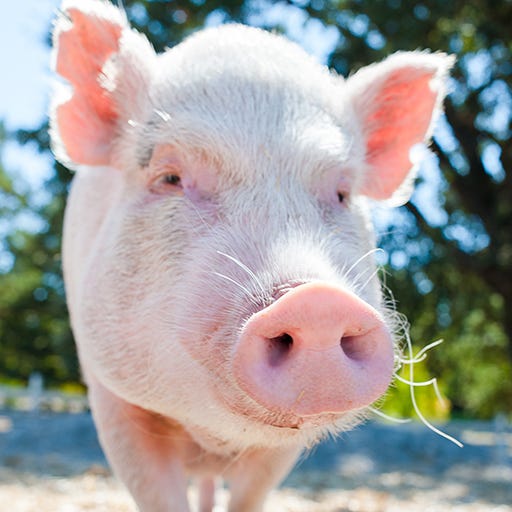
What was, until that point, just a matter of normal protocol suddenly became “a matter of life and death.” Tears formed in this person’s eyes, as she begged the lab to save Petunia rather than slaughter her.
And the tears saved Petunia’s life. Now the happy piglet scampers in the fields and nudges visitors with her nose, begging for a belly rub.
Rescues like Petunia’s may soon be much more common. In the last few months, the NIH and FDA have both made historic declarations phasing out experiments on animals. And this is part of a much broader trend: increasingly, human societies are treating the other animals of this earth as living beings, not things.
And it is about time. We have created the age of extinction, with trillions of animals disappearing forever. It is as if our planet has been marked for death. But, especially in times that are dark or dangerous, we must be on the watch for the coming of wonders. And if we watch closely, at places like farm sanctuaries, we can see a different story unfolding. Tears are flowing freely, as we see what is being done to the gentle creatures of this earth. But through those tears, we find the power to rescue – and to become caretakers, rather than tormentors, of sentient life.
Sorry I'm so late getting around to reading this. This is what everyone needs to hear. We have to remember we share in life, all of us. Respect for that is the way forward through all problems ---
family, society, habitat, nation, cosmos . . . thanks for acting on your values and for crystallizing your experience this way. It makes a good alternative July 4th message!