

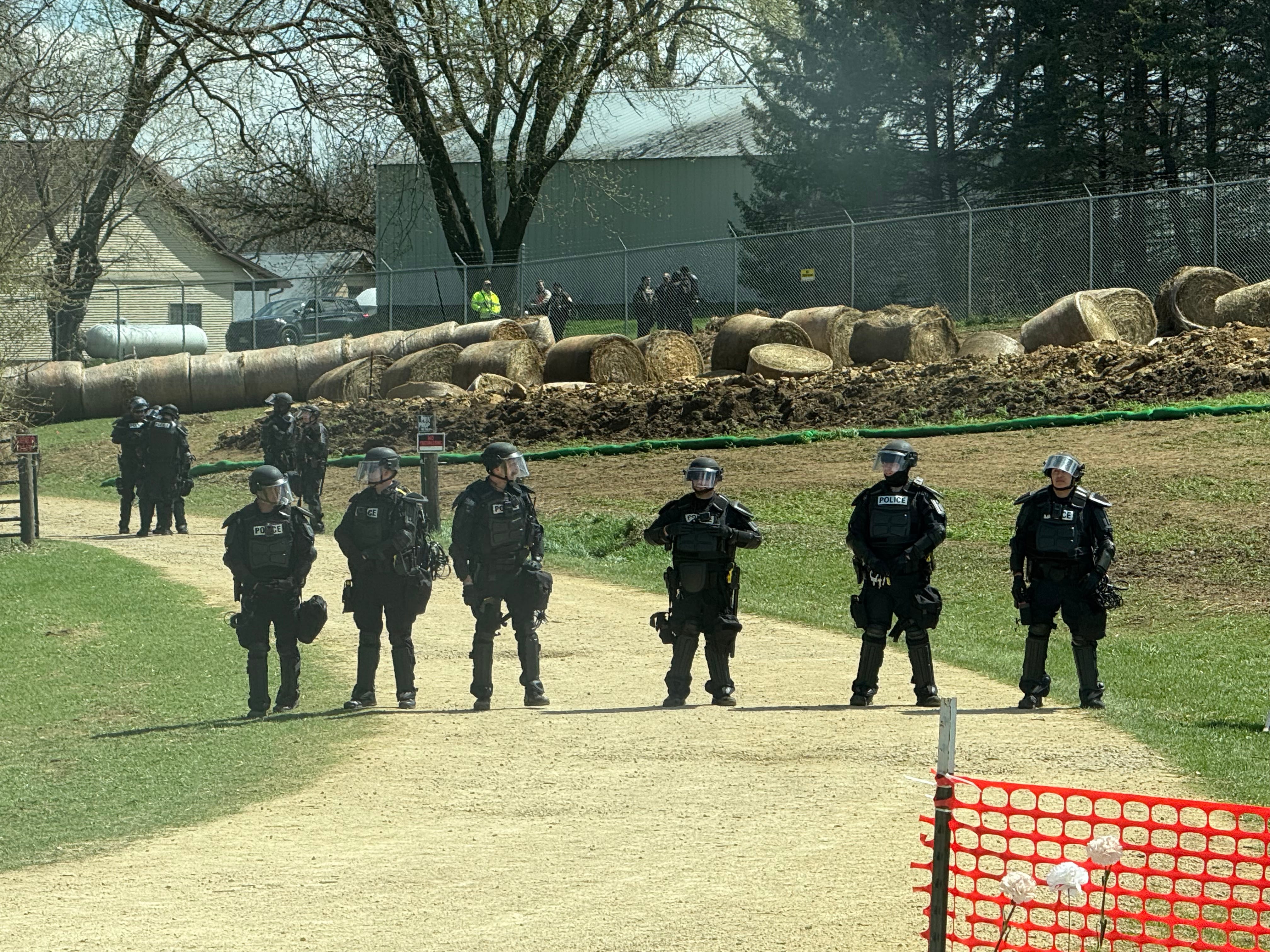
They brutalized a disabled grandma.
Jeryl has five grandchildren and suffers from multiple disabilities, including the deteriorating disc, requiring a wheelchair for mobility. She was one of 1000+ activists who came to Ridglan on March 15th to give aid to dogs suffering from criminal abuse.
But when she approached the facility she was met with ruthless police violence. One officer shoved her to the ground. Another pepper sprayed her directly in the eye. A third kicked her vulnerable back viciously.
She was blinded, vomiting, and forcefully taken to a police van. As activists in the van tried to console her, she began to cry — but not for her own pain. “I just wanted to save one dog.”
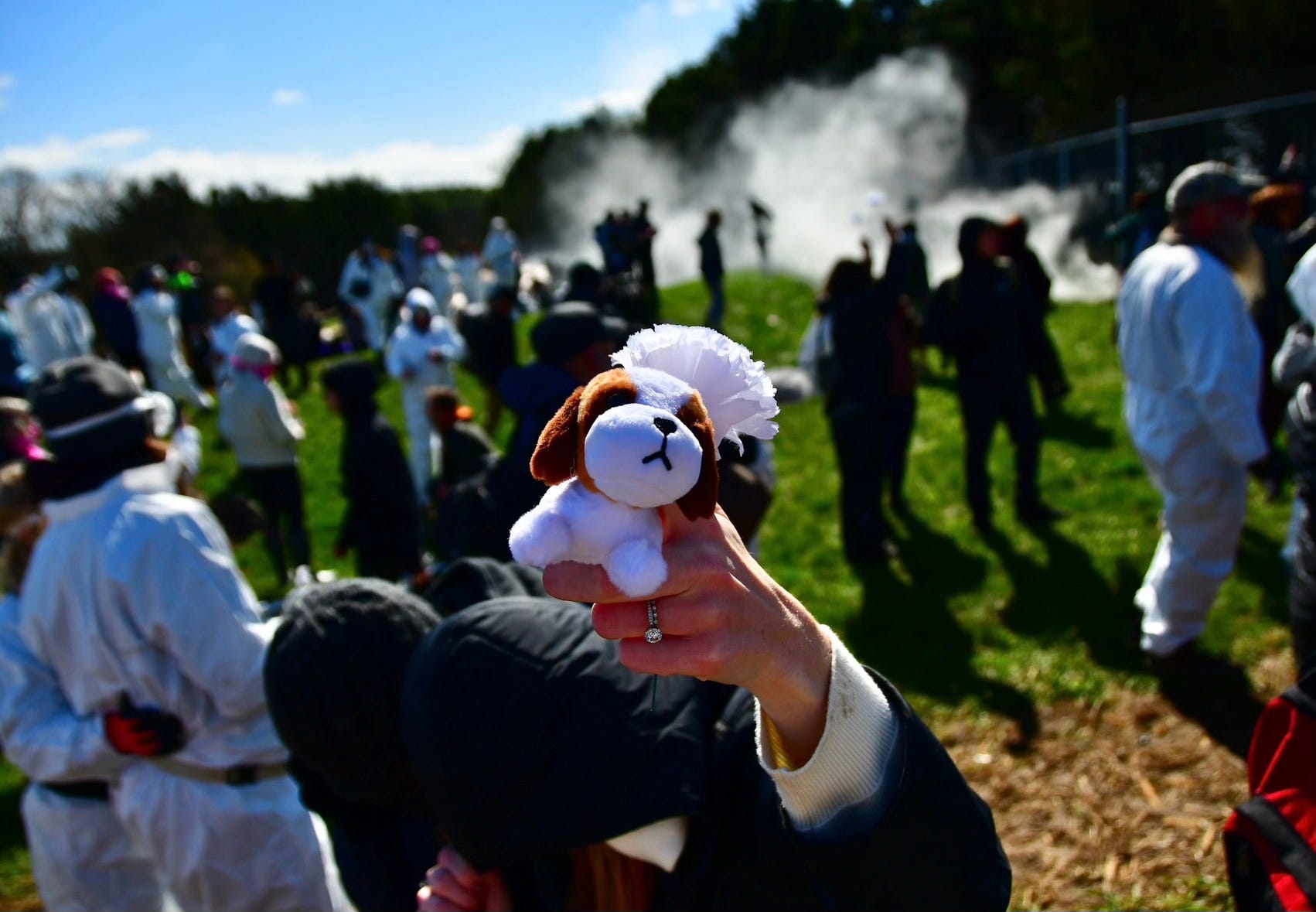
Repression like this can feel terrifying and insurmountable. And that is precisely its goal: to scare people into inaction. But one of the secrets to successful social movement is that there is a way to make repression backfire. Indeed, from the Civil Rights Movement to Occupy Wall Street, effective movements have harnessed repression to bring attention to the injustice of a system. Civil Rights activists led by Dr. King intentionally marched in Birmingham in 1963 with the knowledge that they’d face brutal violence. Occupy Wall Street went viral after a protester was maliciously pepper sprayed directly in the face by a police officer. In these cases and others through history, it was the repression and not the activism directly that led to transformative change. We can do the same for animal rights if we keep these four things in mind as we confront the repression in our movement.
Every voice matters. Movements that depend on a few key leaders inevitably fail repression’s test. It’s too easy to neutralize a few people and leave a movement voiceless.
But if a movement is diverse and numerous, it can not be silenced. And when the public sees ordinary people resisting — and not just celebrity leaders — it inspires everyone to join. It was a nameless woman who was pepper sprayed and not Bernie Sanders who launched Occupy into national prominence. It was previously unknown activists — Rosa Parks and the Greensboro Four — who inspired the movement for civil rights.
Jeryl was not a celebrity. But it’s stories like hers that will allow us to harness repression for change.
Name the villain. If everyone is a villain, no one is. This is one of the lessons of Hannah Arendt’s study of atrocities in history. When repression is made abstract and bureaucratic, it’s impossible to generate directed outrage against concrete change.
The Civil Rights Movement named specific villains like Bull Conner, the brutal police commissioner in Birmingham. Occupy Wall Street identified a handful of billionaires — Bezos, Musk, and Gates — who held more wealth than the entire lower half of the nation combined.
The Animal Rights Movement must also name its villains. Sheriff Kalvin Barrett voluntarily stepped into that role.
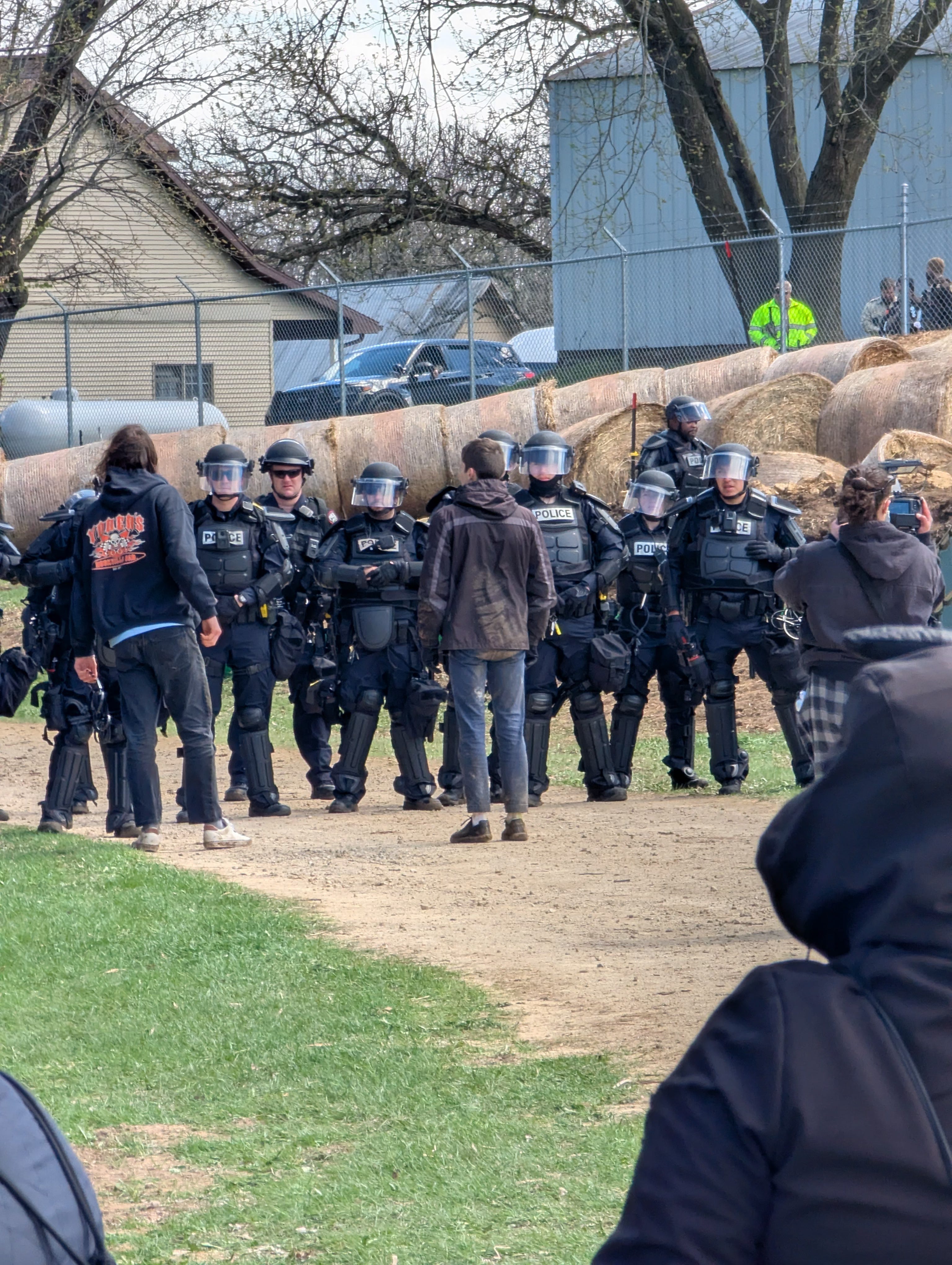
Take the moral high ground. The danger of naming villains is that it can cause a movement to devolve into hatred or even violence. This undermines public sympathy and can legitimize repression.
The Civil Rights Movement strove to resist this. King’s concept of the Beloved Community — a family of people who are cherished and cared for and nourished — included even his adversaries like Lyndon Johnson. Occupy, in contrast, largely lost the moral high ground by demonizing its adversaries. Luigi Mangione, United Healthcare CEO’s killer, is a result of this moral corruption. It is part of the reason the fight against inequality has gone so badly in recent years.
It is important to remember that every villain is just a future friend. If Kalvin Barrett chooses to break bread with animal advocates, I’ll be first in line to host him for a vegan meal.
Courage of purpose. Repression is disorienting. Tear gas and pepper spray literally prevent us from navigating the world. This makes it particularly important to focus on our purpose when facing repression. Without this courage of purpose, we can lose sight of why we resist — and thus give in to fear.
The Civil Rights Movement adopted the principle, accept suffering without retaliation, for this reason. The courageous sacrifice was part of their purpose. Occupy, too, has been at its strongest when it keeps its courage of purpose. Bernie Sanders has suffered numerous efforts to repress his cause including illegal efforts to tilt the DNC against his 2016 presidential primary, but he never loses his focus: defending the working class.
Courage of purpose is one of the reasons why Jeryl’s story is so inspiring. When I first heard what happened to her, I started to tear up. I could feel her fear and pain. But when I heard her response in the police van — “I just wanted to save one dog” — my tears of suffering became tears of awe. Even as Jeryl was threatened with permanent disability, she kept her focus on the dogs. This is incredible courage and focus. And this is how we will win.
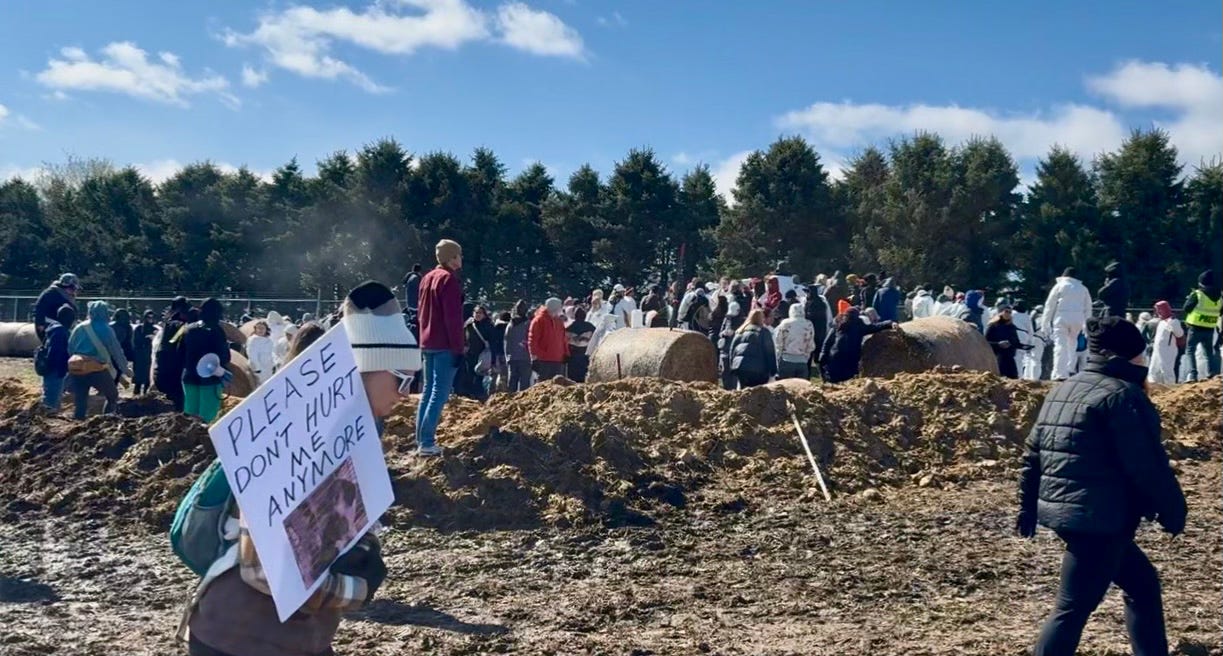
Repression is indeed very frightening. But we will make it backfire. Jeryl’s story shows us how. She is not a celebrity but she speaks out. Her story is specific and concrete — pointing to specific villains. And she does so with kindness — and thus maintains the moral high ground. But most important, Jeryl has courage of purpose. Let them attack me, her actions say. I will never give up my purpose: getting every Ridglan dog out of a cage.
Wayne, "It is important to remember that every villain is just a future friend . . . accept suffering without retaliation." Jeryl's statement, "I just wanted to save one dog" is a great tagline. Risa M
Bless you all! Prayers 🙏 for success.