


For decades, the media was silent about animal rights, even when confronted with atrocities. But something has changed in recent years. And the reason for that is… you.
Since the animal rights movement’s birth in 1975, animal advocates have desperately sought mass media coverage of the horrific abuses committed against animals. But almost always, we failed. Ridglan Farms was a devastating example of this failure. When whistleblower accounts came forward of pyres of burning animals at Ridglan in 2006, there was not a single newspaper article written about the revelation.
How things have changed.
On Friday, one million people tuning into ABC’s Nightline were told the harrowing story of the beagles at Ridglan Farms. The piece goes into gruesome detail as to the abuses suffered by the dogs at Ridglan, such as the surgeries performed without anesthesia. And it ends with a heartwarming scene: one of the Ridglan puppies, Beau, being taken to his forever home.
Then today the New York Times published a remarkable op-ed by Pulitzer Prize winning columnist Nicholas Kristof about the pork industry’s corrupt efforts to keep mother pigs trapped in cages. In the piece, Kristof describes the fight for animal rights as “one of the great but incomplete moral revolutions of our lifetime.”
It’s hard to think of a better two days of media in the animal rights movement’s history. And this is a dramatic change from where we were 20 years ago, when Ridglan could literally incinerate hundreds of dogs without even a local newspaper reporting about it.
What changed?
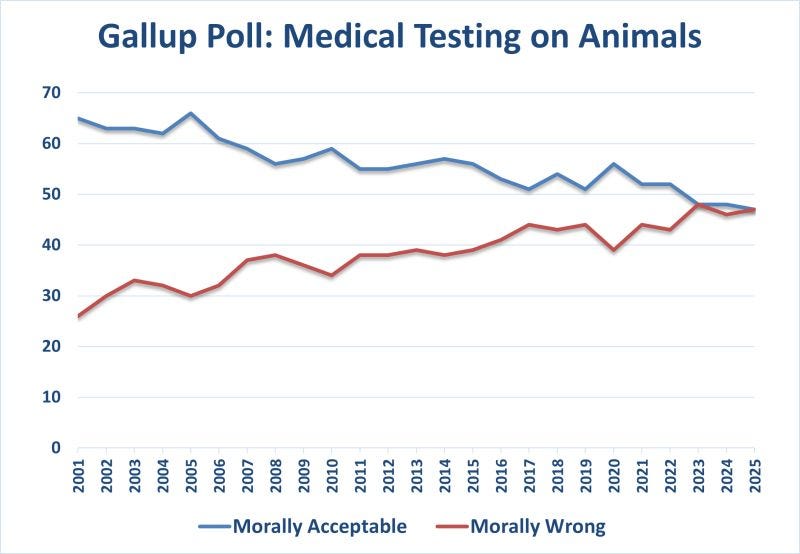
The shift in coverage might be driven by audience preferences for pro-animal content. Public opinion on vivisection, in particular, has transformed in the last 20 years.
There has also been an increase in the availability of independent voices in media. Independent platforms, such as podcasts and YouTube shows, are increasingly dominating the typical American’s media diet. Smart phones and cheap cameras have made it easy for anyone to create content. The former CIA analyst Martin Gurri has argued that this dramatic change in our information ecosystem—the end of the state’s monopoly on communication—has caused the public to revolt against elite control. That revolt has probably benefitted animal rights.
But I think neither of these explanations is really satisfactory. Public opinion on animal rights issues other than vivisection has hardly changed in recent years, yet the NYT is publishing stories on pig rights. And the surge in pro-animal coverage is not exclusive to independent media. Indeed, in many ways, traditional outlets like the Times have been better than YouTube, which has very few prominent animal rights influencers. There is a better explanation for the changing media grounded in the science of social contagion. And that explanation is: you.
The psychologist Jonah Berger at the University of Pennsylvania, perhaps the world’s foremost expert on virality, has pointed out that the modern media climate is driven almost entirely by word of mouth. Precisely because communication has become so cheap, massive chains of social connection can spread new messages quickly across the globe. Berger created an acronym to explain this phenomenon: STEPPS. From the first S (Social currency: people share content that makes them look good) to the last (Stories: people spread ideas in the form of stories), content is contagious when it follows these simple steps. But the driving force behind all of the STEPPS is that they create incentives for an audience to share content.
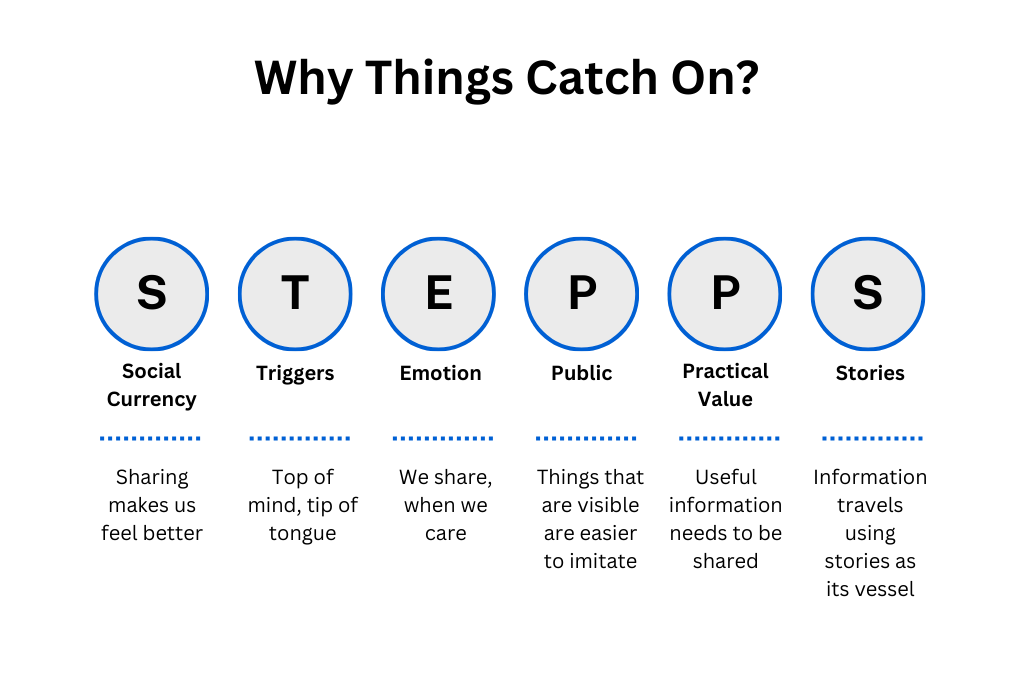
In short, media goes viral when it harnesses its audience. And that is precisely what’s happened with animal rights. It’s not me or ABC or The New York Times that are changing the media climate. The audience is driving this change. You are driving it.
That is very evident in the Ridglan case. The national media coverage came in the wake of social media explosions. Over the last few months, it feels like every random photo posted about Ridglan immediately reaches 100,000+ people. This gave openings for mainstream media to cover the story, too.
But it’s also true of other animal issues. My friend Lewis Bollard has had numerous posts go mega-viral as he campaigns to get pigs out of cages. Millions of people across social media, including people from all walks of life, shared the story of corrupt politicians torturing mother pigs in gestation crates. That’s surely part of the reason why the Times felt a prominent column was justified.
And this is precisely why we must continue developing the grassroots.
Tomorrow, we’ll have our next opportunity to build that grassroots power. We can launch the fight for animals into the stratosphere—the front page of every newspaper in the nation. But to do that, we can’t count on prominent journalists, celebrities, or even movement “leaders” like Lewis or me.
We’ll count on you.
RSVP for the all-rescuer Zoom on Sunday, May 31 at 3 pm ET / 12 pm PT to learn how we plan to make your voice as powerful as possible for animals!
All I can think of to say is deep heart felt thank you for all you have done and are trying to do.
Thank you for sparking the campaigner in thousands of people worldwide, following the coverage of Ridglan Farms rescues. This is surely the beginning of the end of animal testing.