

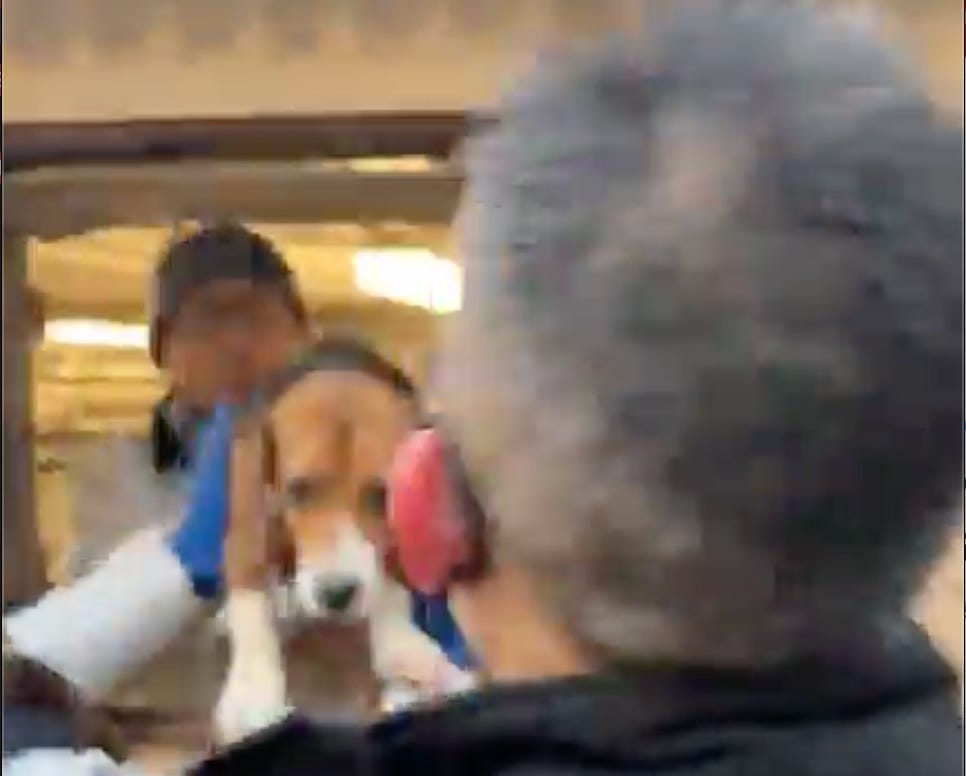
The beagle with the serial code YPP5 seared into his ear burst through the broken window into a bright new world on March 15, 2026.
Moments earlier, my friend Austin had taken this sad-eyed puppy from a cage at Ridglan Farms and thrust him into my hands through a window. YPP5 was trembling. The rush of new sights and sounds—the mass of people in white Tyvek suits, the crack of thunder in the sky—must have been a terrifying experience. I carried him to a member of our rescue team.
“He’s yours. Keep him safe,” I said with one look. And then I went back for more.
The right to rescue is being featured on Radiolab. It’s the dramatic account of how 8 jurors in southern Utah, presented with paper cut-outs of piglets, and banned from hearing the words “animal welfare,” nonetheless sided with rescuers over an abusive industry. Give it a listen!
But before I could take another dog, the police arrived and put me in handcuffs. I watched as they converged on rescuers all around me. My heart sank. Was YPP5 seized by the police? Was he back in a Ridglan cage, destined for surgical mutilation or death?
Would he ever get a hug or see the sun again? Would YPP5 ever get a real name?
I thought of that moment this week as felony burglary charges were formally brought against me and three other rescuers. The government wants to teach us a lesson: it’s not worth it.
What the authorities don’t appreciate is that the repression will backfire. Because the repression is merely highlighting that it is worth it. The public recognizes that abused animals are not “things” but sentient beings with inherent value. And when state repression forces our society to answer the question—what is an animal worth?—the people are siding with us.
This debate is unfolding in criminal trials. This week’s Radiolab episode chronicles how jurors responded to felony burglary charges filed against me for rescuing two injured piglets from the largest pig factory farm in the world. When the prosecutors compared the piglets to dented cans to explain why you cannot steal damaged goods, the jurors revolted and acquitted me.
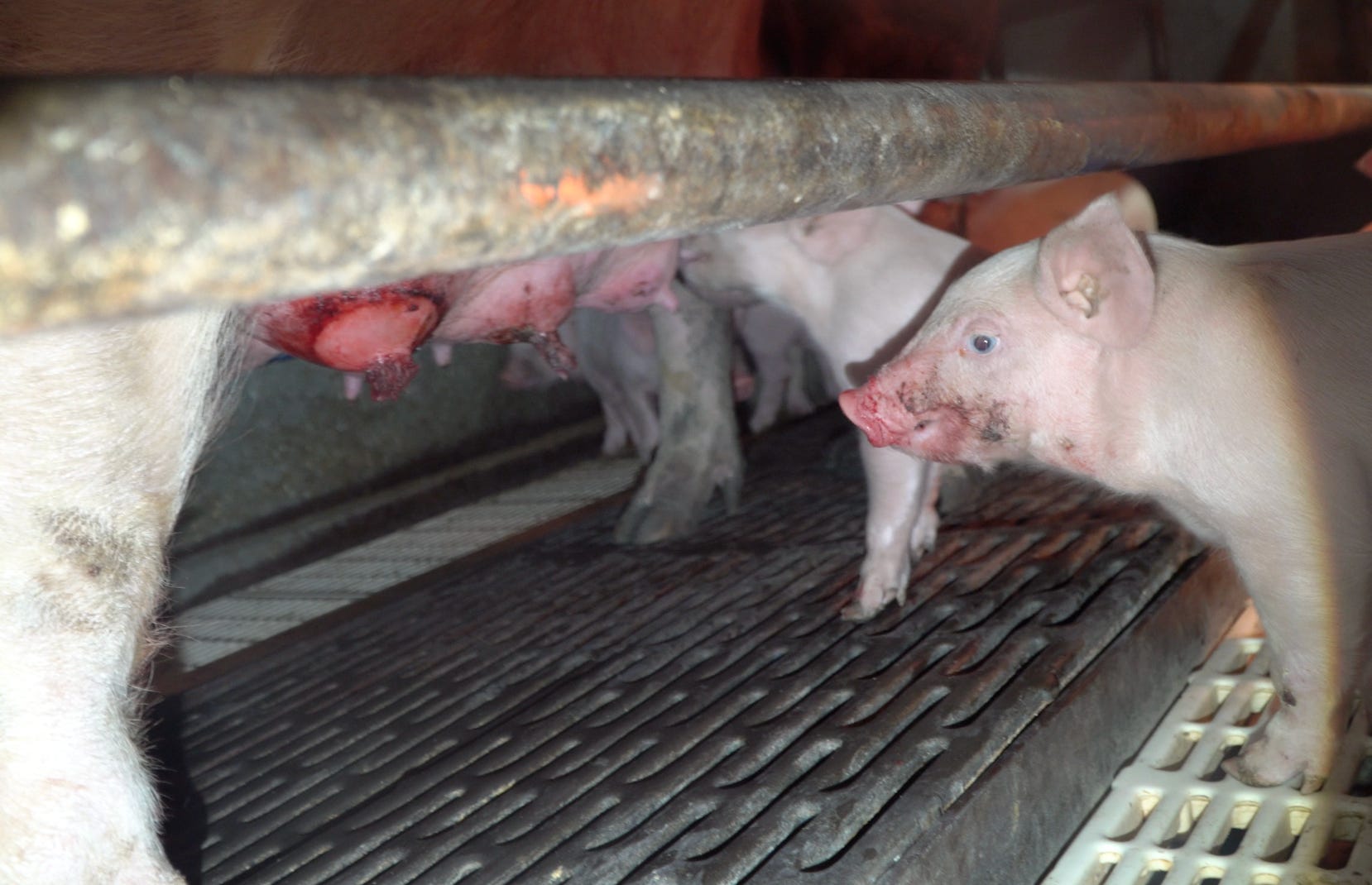
Another example: on Thursday, a Court of Appeals reversed my felony conviction in California for rescuing 38 distressed hens from an abusive factory farm in Sonoma County. The authorities are trying to force people to accept that animals are things, but we are beating them in court.
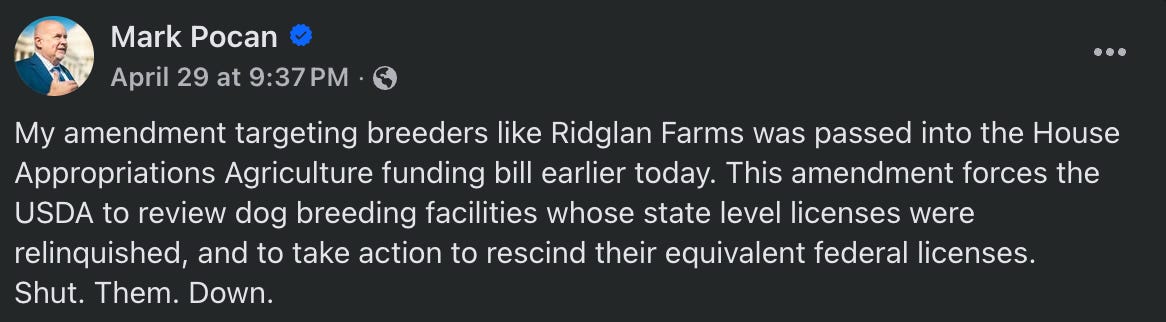
The debate is also unfolding in our other institutions. In the past few weeks, multiple legislators and institutions—including Rep. Mark Pocan, who represents the district including Ridglan Farms—have been asked by Ridglan to protect their property and shut down the protests. But Pocan refused the request and joined the activists instead. “Shut. Them. Down,” he wrote on social media.
The New Yorker’s Jay Kang wrote that this rapid institutional change is “a case study in effective activism” driven by “a lot of people willing and ready to go to jail through putting their bodies on the line.” It’s hard to be against grandmas brave enough to face off against police violence.
But the most important place this debate is unfolding is in the animal movement itself. Animal advocacy has existed for millennia, going back to ancient Greek philosophers such as Plutarch, who compared the slaughter of animals to the slaughter of human beings. But for those same millennia, no one has really listened to us.
“Yes, animal cruelty is not great,” the authorities say. “But it’s not that big of a deal.”
But it is that big of a deal. The average experience of a land animal on Earth is that of a tortured creature trapped in a cage. What is happening to YPP5, and other animals, is an emergency. A crime. An atrocity. And we now have people stepping up to show this.
In 2017, when we first started campaigning at Ridglan, we had 6 rescuers willing to risk arrest to save a blind beagle puppy. We got some attention and support, but the Ridglan dogs remained trapped in cages.
In 2026, we went from 6 rescuers to 1,000. And these rescuers risked not just arrest but brutal police violence. And we didn’t just get exponentially more attention. We got the dogs out.1
The Harvard scholar Joseph Henrich has noted the importance of this sort of risk-taking in changing culture. It’s hard to get anyone to pay attention, much less change, if we don’t put our money where our mouth is. But when people start doing this in large numbers—what Henrich calls a “credibility-enhancing display”—things can rapidly change. If people continue to risk everything for the animals, even the authorities will be forced to see them, not as “things,” but as sentient beings.
That includes YPP5. In one of my first calls upon getting out of jail, a member of the rescue team gave me the good news.
“We’ve got him. He’s safe.”
The fight isn’t over. I and my co-defendants face up to 12 years in prison at a trial that will unfold in the next few months. More importantly, there are 40,000 other dogs across the nation still trapped and awaiting torture or death in laboratory cages. More people will need to step up if we’re going to save them.
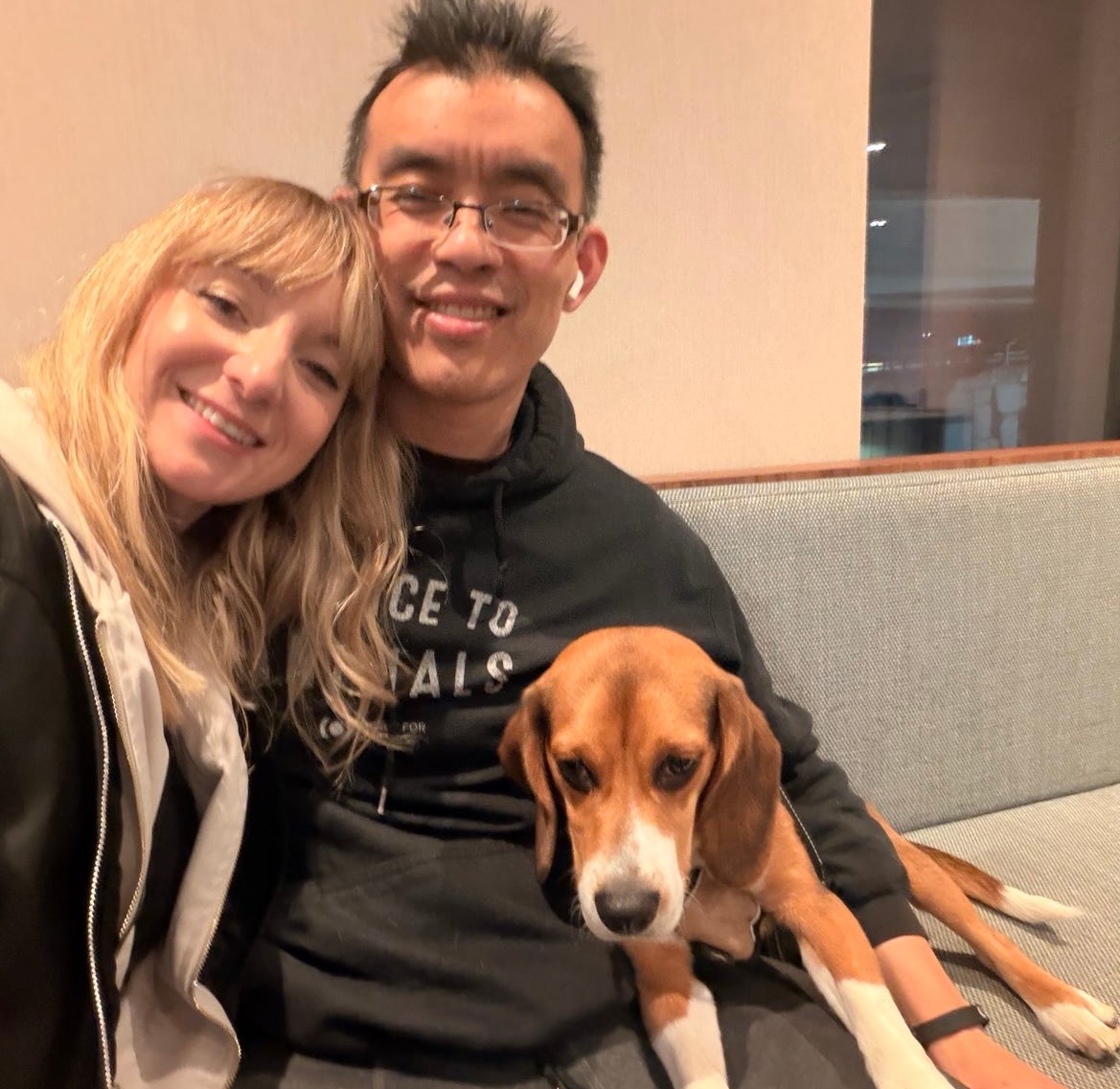
But it’s worth it. YPP5 is worth it. Because he is not a serial code. He is James. And yesterday, James flew to his new forever home with me, my wife Rose, and our other little boy Oliver. James is family. So too are the other animals of this earth. And we will risk everything to rescue them.
Let them try to imprison us for protecting our families. It will only prove that, when we say the animals must be freed, we mean what we say.
Other stuff
The California Court of Appeal has reversed my felony conviction and acknowledged the necessity defense for animals. I am grateful to Prof. Justin Marceau at the University of Denver, who argued my appeal, and the numerous other scholars and lawyers across the nation who supported the case. This includes one of my former professors, Martha Nussbaum at the University of Chicago Law School, and Kristen Stilt, a leading scholar of animal law at Harvard. The deep irony is that the authorities in Dane County are making the same mistake that they made in Sonoma County in my California conviction: asserting that animals are mere things.
We need to sustain this whirlwind moment. I’ve written numerous times in recent years about the power of these moments. But among the most important lessons from history is that it’s not enough to harness the moment. We have to sustain its power. I call this the Day 2 Problem, i.e., after you win on Day 1, what do you do on Day 2? I’ll be sharing how we can answer this question later this week.
I’ll be speaking about the Ridglan rescue at the Grassroots Animal Rights Summit on May 17 in Washington, DC. This will be our first opportunity to gather with other activists and plan our next move. Don’t miss it!
For the time being, I’m declining to comment on the negotiation that led to the release of the dogs. I’ll explain more later. But suffice it to say that I’m elated that they’re coming out.
I also have animals in my life that I’ll go to prison for. I even hope that if it comes to it I’d protect them with my life. And while not every animal has a human protector in their life, every single one of them deserves to live their life free, unharmed and according to the needs of their species. With people like you, your wife, Dean, Aditya, Michelle, and all the other heroes of Ridglan farms, this is a dream that we are coming closer to. I am deeply grateful to you for inspiring us, showing us the way and bringing out the best in us ❤️
Yes, animal cruelty IS a big thing! I really struggle to understand how not everyone thinks the same..
Your words moved me to tears, again..
Thank you again for everything you do for all animals! You will always have my support! ❤️🫶🏼❤️🫶🏼