

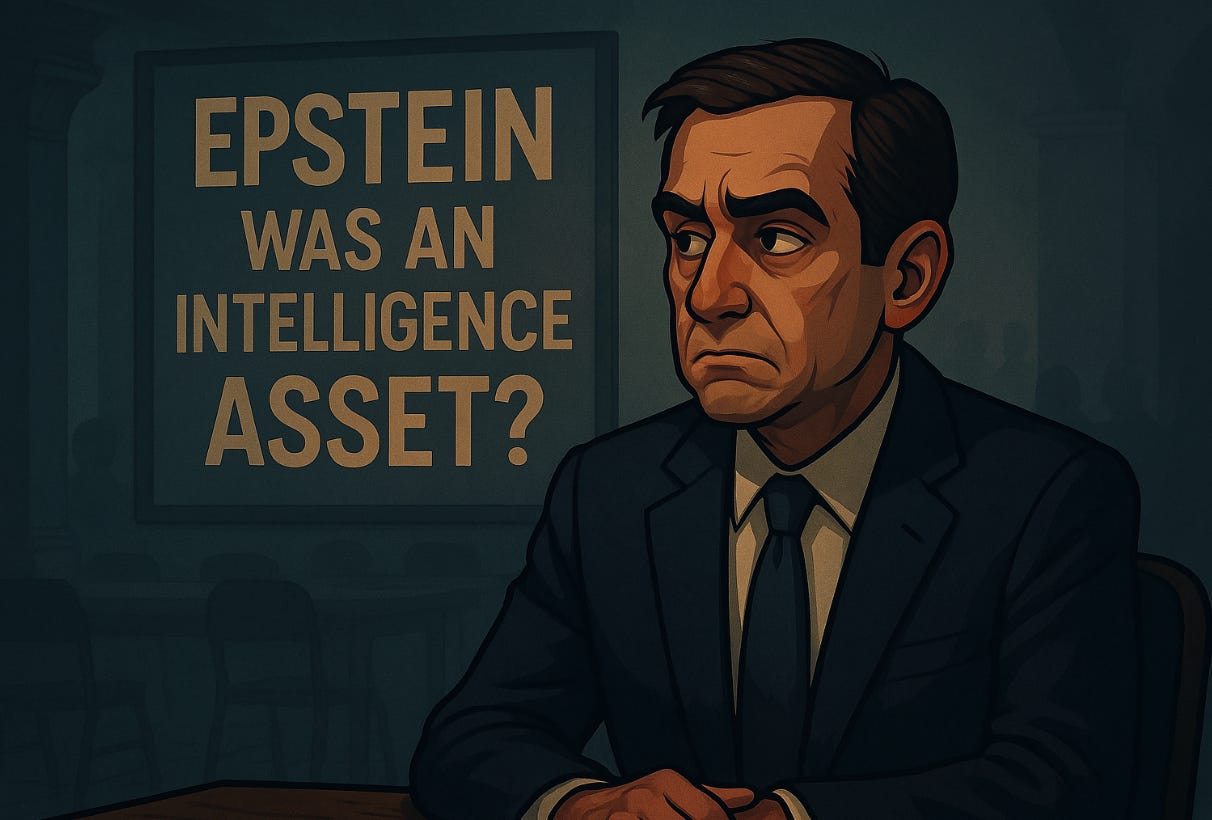
I’m not one to fall for conspiracy theories. But two aspects of the Jeffrey Epstein case, involving a disgraced financier who supposedly committed suicide in jail after being arrested for child sex trafficking, have given me great pause.
The first is the almost absurdly short list of evidence that the Department of Justice released about the case back in February. DOJ accompanied this release with statements by various government officials lauding Trump’s commitment to transparency. Take, for example, FBI Director Kash Patel’s statement:
There will be no cover-ups, no missing documents, and no stone left unturned — and anyone from the prior or current Bureau who undermines this will be swiftly pursued. If there are gaps, we will find them. If records have been hidden, we will uncover them. And we will bring everything we find to the DOJ to be fully assessed and transparently disseminated to the American people as it should be.
But, for anyone with experience with criminal cases, the evidence list demonstrated the opposite of transparency. The list has a mere 3 pages of evidence, in a case that supposedly involved hundreds of victims, with little indication of each piece’s significance. Compare, for example, the evidence list from my own prosecution in Utah, which is 12 pages long and has far more details regarding specific individuals from whom evidence was taken, including Craig Wilson, a senior executive at Costco. It defies reason that the federal government would not have a longer and more detailed set of evidence in the Epstein case than in a case involving the theft of $42 piglets in a small county in Utah.
The second factor, however, is the bizarre public statement made by the primary prosecutor in the Epstein case, Alex Acosta, back in 2019 about whether Epstein was an intelligence asset.
REPORTER: Were you ever made aware at any point in your handling this case whether Mr. Epstein was an intelligence asset?
ACOSTA: There has been reporting to that effect… I would hesitate to take this reporting as fact… I can’t address it directly because of our guidelines.
You can watch the full video yourself (at 45:47).
There are a few things to note about this response. The first is that Acosta does not deny that Epstein was an intelligence asset but simply says “there has been reporting to that effect.” That is a bizarre way to respond if there isn’t any truth to the allegation. The second is his demeanor throughout the exchange. He doesn’t come across as someone who’s been the victim of an absurd smear — angry or disbelieving. He comes across as someone who has something to hide. But the most important thing to note is that Acosta notes that he can’t talk about Epstein “because of our guidelines.”
This last statement comes as close as possible to being an outright admission that Epstein was holding national security secrets. There are no “guidelines” that would prevent a former federal prosecutor from correcting media misinformation about a case. To the contrary, it happens all the time, and it would have been in Acosta’s interest to deny the media in this case. In contrast, there are extensive guidelines that forbid government officials from talking about classified information, such as intelligence. But they only apply when such classified information is at stake. In short, by saying there are “guidelines” that prevent discussion, Acosta is effectively conceding that Epstein held classified information and was likely an intelligence asset of some form.
It’s hard to know what that means exactly. Was Epstein working with the US government? With a foreign ally? But the apparent cover-up around Epstein, should make all of us question the trust we place in government. If the government can cover up a child sex ring, what else can they cover up?
Even more importantly, the Epstein case underscores the importance of radical transparency. When our institutions have the power to do great harm, they have a duty to act with great transparency. Indeed, it’s possible they won’t survive without this commitment, given the rapid changes in our information ecosystem. Secrets have become much harder to hide.
This has implications for activism. What role should security culture and secrecy have in our activism? How much should we commit to working within institutions that are facing serious challenges? And what role can transparency activism have in our more fundamental mission of animal liberation? I don’t know the answers to all of these questions, but I suspect they will be important to the future of the movement.
State secrets in a sex trafficker's bag. one of his address books --- not quite his 'blackmail strategy' book --- is already freely available. What's happening now is 1% strip poker. was News Corp the third party Epstein was dealing with to release extortionate videos through?